
Dendrobium delacourii
Dendrobium delacourii
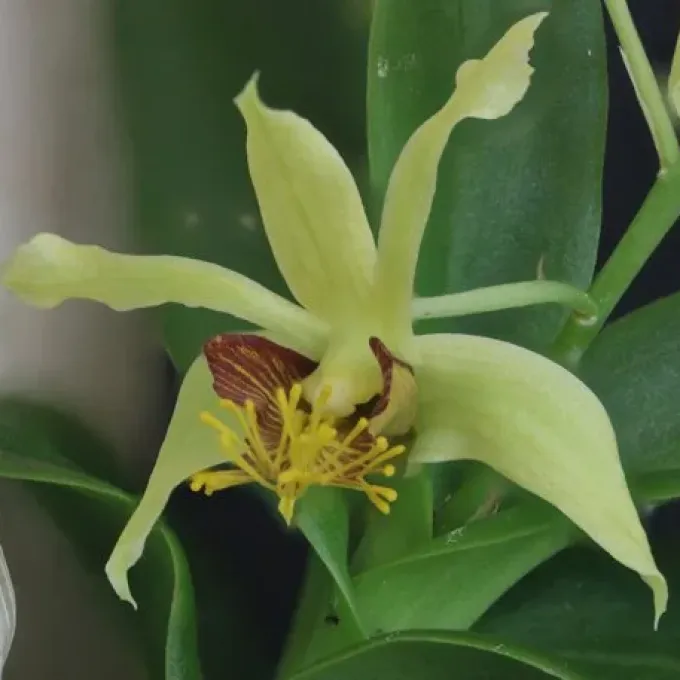
Description
Growing requirements
Dendrobium delacourii is a compact epiphytic orchid species belonging to the Orchidaceae family. It is native to the tropical forests of Southeast Asia, specifically found in countries like Vietnam and Thailand, where it grows on branches and trunks of host trees.
The plant features small, clustered pseudobulbs that store water and nutrients, which is a critical adaptation for its survival during periods of fluctuating moisture in the tropical climate. The foliage is typically narrow and leathery, designed to minimize water loss.
For successful cultivation, this species requires a warm and humid environment, mimicking its natural habitat. High relative humidity (60% to 80%) is essential, combined with good air circulation to prevent fungal pathogens from settling on the plant tissues.
Regarding soil requirements, it is strictly an epiphyte; therefore, it does not grow in standard garden soil. It must be potted in a coarse, well-draining orchid mix, primarily composed of pine bark, charcoal, and sphagnum moss to provide roots with necessary oxygen.
Agrotechnical care includes providing bright, indirect sunlight throughout the year. Fertilization should be applied weakly and frequently during the active growing season, with a reduced watering schedule during the winter dormancy period to encourage future flowering.
Main diseases and pests
The most common threats to Dendrobium delacourii are root and stem rots, which often occur due to poor drainage, stagnant water, or insufficient airflow within the plant's immediate environment.
Pest issues include typical orchid pests such as spider mites, which thrive in low humidity, and scale insects that feed on the sap of the pseudobulbs and leaves, leading to chlorosis and stunted growth.
Mealybugs are also frequently encountered, often hiding in the crevices of the pseudobulbs and leaf bases, making them difficult to detect until the infestation becomes significant.
Proactive management includes regular monitoring, the use of sterile growing equipment, and the application of targeted horticultural oils or insecticides when necessary to keep pest populations under control.
- Use of specialized orchid fertilizer at half-strength.
- Implementation of regular leaf cleaning to prevent dust accumulation.
- Isolating new specimens to prevent the spread of infections.
- Maintaining a consistent temperature differential to induce blooming.