
Cucumber Orchid
Dendrobium cucumerinum
Description
Growing requirements
The Cucumber Orchid (Dendrobium cucumerinum) is a miniature epiphytic orchid belonging to the Orchidaceae family. It is native to eastern Australia, where it grows naturally on the branches and trunks of various trees.
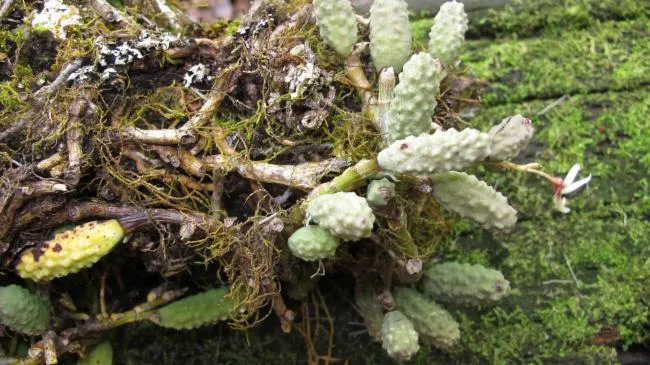
The plant gets its common name from its distinctive succulent leaves, which are small, cylindrical, and textured, closely resembling tiny cucumbers. This morphological adaptation helps the plant store water during dry periods.
In cultivation, this species thrives best when mounted on cork bark or tree fern slabs. This setup mimics its natural environment, allowing the roots to dry out rapidly after watering, which is essential for preventing root rot.
The plant requires bright, filtered light and high humidity levels. Direct sunlight should be avoided during peak hours, as it can easily damage the fleshy leaves and lead to dehydration or burn marks.
Temperature management is key to blooming. The orchid prefers warm summer days with good airflow and a noticeable drop in temperature during winter nights to trigger the development of its fragrant flowers.
Main diseases and pests
Root rot remains the most significant threat to the Cucumber Orchid, usually caused by overwatering or poor drainage. Ensuring the roots remain well-aerated is the primary defense against fungal infections.
Pests such as spider mites, scale insects, and mealybugs are known to target this species. They thrive in environments with low air circulation and insufficient humidity, often hiding in the crevices of the textured leaves.
Monitoring for pest activity should be a regular part of the plant maintenance routine. Early detection allows for the application of mild insecticidal soaps or horticultural oils before the infestation becomes severe.
Fungal leaf spot diseases can occur if water remains stagnant on the surface of the leaves for too long. Improving air movement around the plant is the best preventative measure to keep the foliage healthy.
Always use sterilized tools when pruning or removing dead pseudobulbs to avoid the transmission of bacterial diseases between your plants. Maintaining overall hygiene in the greenhouse or growing area is vital.