
Dendrobium crumenatum
Dendrobium crumenatum
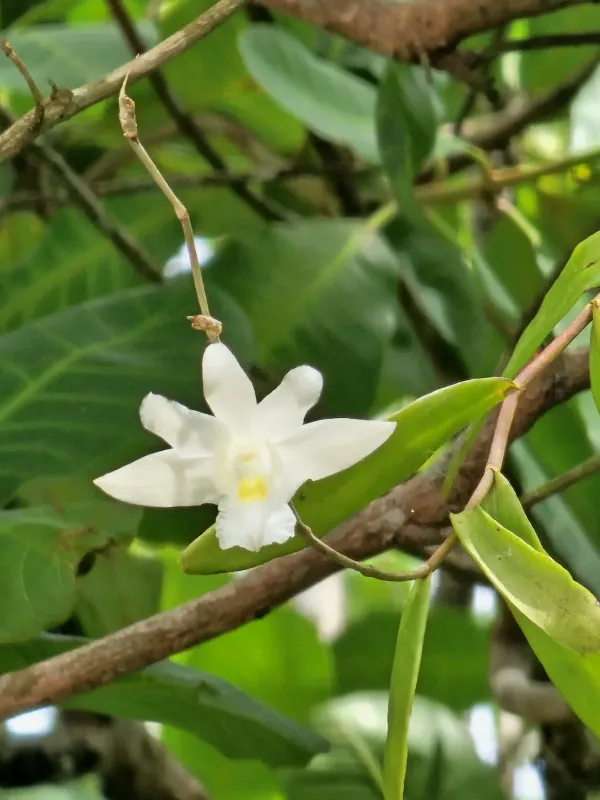
Description
Growing requirements
Dendrobium crumenatum, commonly known as the Pigeon Orchid, belongs to the Orchidaceae family. It is a highly valued epiphytic orchid native to the tropical forests of Southeast Asia.
The plant thrives in high humidity conditions, typically between 70% and 80%, and requires a tropical climate with temperatures ranging from 22°C to 30°C throughout the year.
Growing media must provide excellent drainage. A mix of pine bark, charcoal, and perlite is standard to ensure the roots remain well-aerated while retaining enough moisture for survival.
Light intensity is a critical factor for the maturation of the pseudobulbs. In a greenhouse or indoor environment, filtered bright light is essential to prevent leaf scorching while promoting successful blooming.
Fertilization is best applied during the growing season using a balanced, diluted orchid fertilizer. Proper nutrient cycling is vital to ensure the development of the characteristic spindle-shaped stems.
Main diseases and pests
The species is susceptible to various fungal pathogens, most notably black rot and root rot, which are often exacerbated by poor air circulation and excessive moisture in the root zone.
Spider mites are common pests that attack the foliage, especially in conditions where relative humidity drops below the recommended threshold for extended periods of time.
Mealybugs can be problematic as they hide in the leaf axils and around the nodes of the pseudobulbs, making them difficult to detect until they have formed a significant infestation.
Scale insects present a continuous risk, as they attach themselves to the stems and weaken the plant structure by extracting sap, which often leads to secondary infections.
Integrated pest management, including regular inspection and the use of targeted acaricides or insecticidal soaps, is required to maintain the health and vigor of this delicate orchid species.