
Dendrobium chrysanthum
Dendrobium chrysanthum
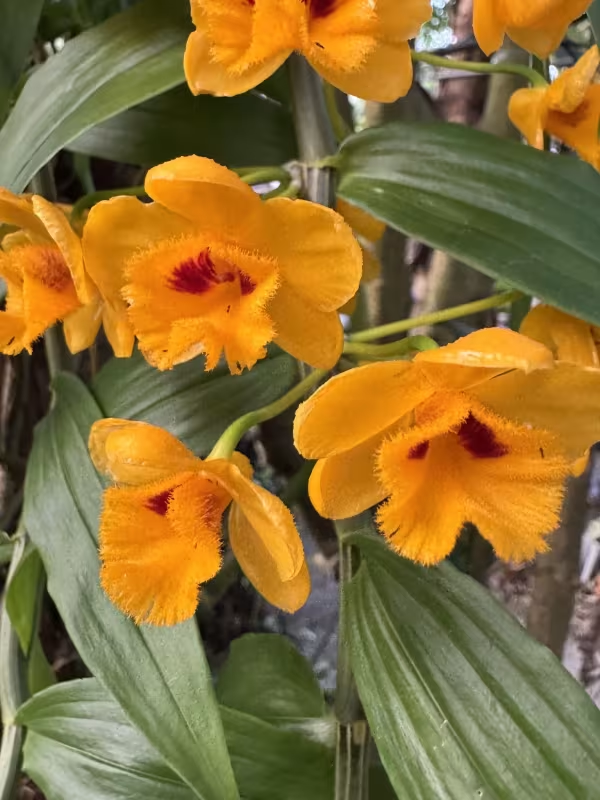
Description
Growing requirements
Dendrobium chrysanthum is a distinctive epiphytic plant belonging to the Orchidaceae family. It is native to the Himalayan region, Southern China, and Southeast Asia, where it grows as an epiphyte in high-altitude forests.
To successfully cultivate this species, growers must provide bright, indirect light conditions. Intense direct sunlight can damage the foliage, while insufficient light prevents the development of flower buds, making balance crucial for success.
Temperature management is vital: the plant thrives in daytime temperatures between 20°C and 25°C, with a necessary drop to approximately 15°C at night to trigger blooming. Maintaining this diurnal temperature cycle mimics its natural habitat.
The potting medium must be porous and well-draining, typically consisting of fir bark, charcoal, and sphagnum moss. Epiphytic roots require excellent aeration; therefore, potting in heavy or dense soil will inevitably lead to root failure.
High humidity levels of 60% to 80% are essential for the plant's health. During the growing season, consistent moisture is required, but it should be significantly reduced during the winter dormancy period to prevent rot.
Main diseases and pests
Pest management focuses primarily on controlling scale insects and spider mites, which are known to infest the plant's leaf axils. Use appropriate systemic insecticides or horticultural oils upon early detection of these pests.
Fungal infections, such as root rot or leaf spot, are the most frequent threats caused by poor ventilation and overwatering. Maintaining air movement around the plant is the most effective preventative measure against these diseases.
Bacterial soft rot can occur in conditions of excessively high humidity combined with stagnant air. Promptly isolating the plant and removing affected tissues is necessary to stop the spread of infection to neighboring plants.
Viral infections can cause discoloration and deformed leaf growth. Unfortunately, these viruses are irreversible, and infected plants should be removed from the collection to protect other specimens from transmission.
Root health is a primary indicator of plant vitality. If the roots lose their firmness or change color from healthy green or white to brown, it is a sign that the current watering regime or substrate quality needs immediate adjustment.