
Dendrobium capituliflorum
Dendrobium capituliflorum
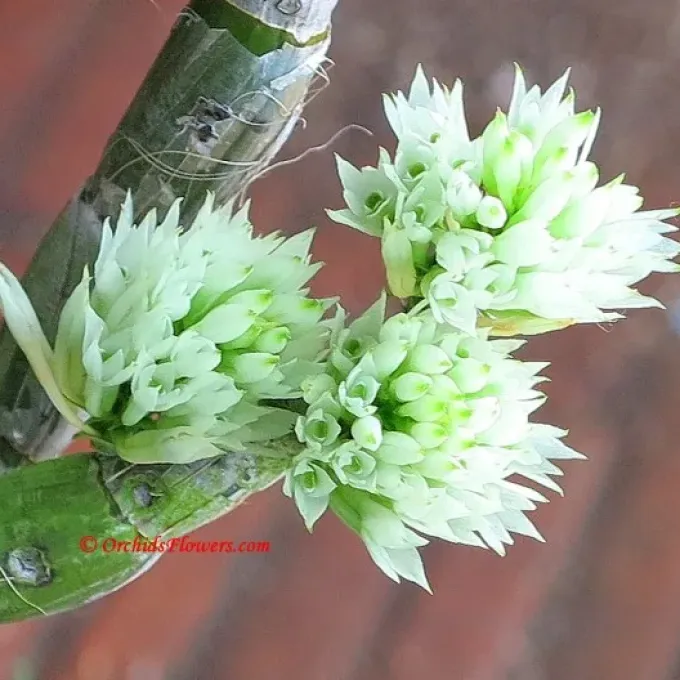
Description
Growing requirements
Dendrobium capituliflorum is a remarkable orchid species belonging to the Orchidaceae family. It is an epiphytic plant that naturally occurs in the tropical regions of New Guinea and nearby islands, growing high within the forest canopy.
To cultivate this plant successfully, it is essential to replicate its natural environment by providing high ambient humidity, ideally between 70% and 80%. Proper ventilation is equally critical to prevent fungal stagnation while maintaining the necessary moisture levels around the pseudobulbs.
The plant requires bright, filtered light to thrive and produce its unique, dense flower heads. Direct intense sunlight should be avoided, as it can easily scorch the foliage and lead to dehydration, whereas insufficient light prevents the plant from reaching its full potential.
The preferred growing medium is a high-quality epiphytic mix consisting of pine bark, charcoal, and sphagnum moss. This composition allows for rapid drainage and ensures that roots remain aerated, which is a fundamental requirement for the healthy growth of any Dendrobium variety.
Economically, this plant is cultivated primarily for the ornamental market. It serves as a prized specimen in private orchid collections and botanical institutions, appreciated for its botanical uniqueness and the distinctive aesthetic of its clustered inflorescences.
Main diseases and pests
Fungal infections pose the most significant threat to Dendrobium capituliflorum, often triggered by overwatering or inadequate air circulation. Root rot and stem rot are common outcomes, requiring immediate repotting and the use of specialized fungicides to save the plant.
Spider mites are notorious pests that flourish in dry environments, often attacking the undersides of leaves. Early detection is key; owners should monitor for fine webbing and yellowing foliage, treating affected plants with appropriate miticides to contain the infestation.
Scale insects and mealybugs represent other frequent challenges for orchid growers. These pests hide in small crevices and leaf axils, slowly draining the plant of its vital sap and making it susceptible to secondary viral or bacterial pathogens.
Cultural hygiene is vital for disease management; this includes using sterilized tools for any pruning or repotting tasks to prevent the cross-contamination of potentially infected materials between healthy plants in a collection.
Maintaining a stable climate and ensuring gentle air movement around the plant are the best preventive measures. By avoiding sharp temperature fluctuations and water logging, the grower minimizes the plant's stress and strengthens its natural resistance to common threats.