
Bracteate dendrobium
Dendrobium bracteosum
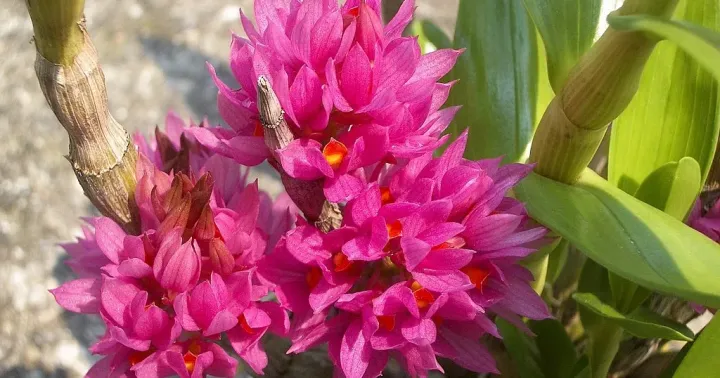
Description
Growing requirements
The Bracteate dendrobium (Dendrobium bracteosum) belongs to the Orchidaceae family. It is an epiphytic species native to the tropical rainforests of New Guinea and nearby islands, growing in habitats characterized by high atmospheric moisture.
Cultivating this orchid requires a warm, stable climate. Daytime temperatures should ideally range between 22°C and 26°C, while nighttime temperatures should be slightly cooler, around 16°C to 18°C, to mimic its natural environment and encourage healthy growth.
High humidity levels of 70–80% are essential for the plant to thrive. In horticultural settings, it is recommended to use ultrasonic humidifiers and ensure excellent air circulation to prevent the accumulation of stagnant water around the foliage.
The planting substrate must be light and breathable. A mix composed of pine bark, charcoal, and sphagnum moss is standard, as it allows for proper aeration of the root system while retaining the necessary amount of moisture for the plant.
Light requirements are significant; the species prefers bright, filtered sunlight. Exposure to direct noon sun can damage the leaves, so growers should implement shade netting or place the plants in areas with morning or late afternoon sun exposure.
Main diseases and pests
Common pests affecting Dendrobium bracteosum include spider mites and mealybugs. These thrive in low-humidity environments or poorly ventilated greenhouses and can cause significant damage to the plant's vascular tissue if not addressed.
Fungal diseases, particularly crown rot and root rot, represent the most critical threats to plant health. These are usually caused by overwatering or poor drainage. Managing these involves strict watering protocols and the application of fungicides when necessary.