
Dendrobium aqueum
Dendrobium aqueum
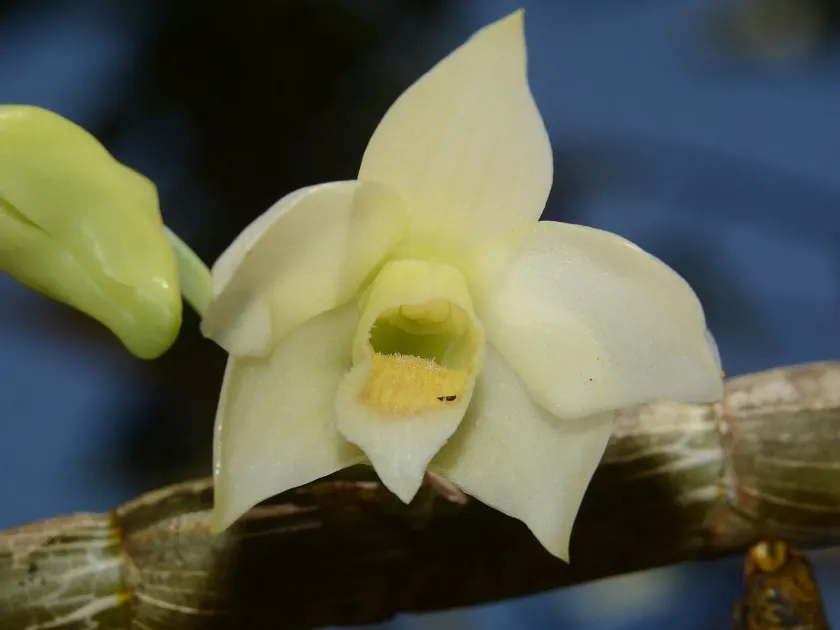
Description
Growing requirements
Dendrobium aqueum is a botanical species belonging to the Orchidaceae family. It is an epiphytic orchid native to the Western Ghats of India, thriving in humid, mountainous tropical environments.
Cultivation requires specific environmental parameters, including high relative humidity (around 70-80%) and a well-ventilated space to mimic its natural montane habitat.
The potting medium must be coarse and well-draining, typically composed of pine bark, charcoal, and perlite, which allows the root system to breathe and prevents waterlogging.
Temperature management is crucial: the plant prefers warm days (20-26°C) and requires cooler nights to trigger natural metabolic cycles and promote future blooming stages.
During the growing season, consistent moisture and fertilization with a balanced, diluted orchid fertilizer are necessary. A distinct dry rest period during winter is mandatory to stimulate flower bud initiation.
Main diseases and pests
The primary threats to Dendrobium aqueum are fungal pathogens such as Pythium and Rhizoctonia, which cause root rot if the substrate stays wet for too long.
Spider mites are a common pest in low-humidity indoor environments, often gathering on the underside of leaves and causing discolouration and tissue death.
Scale insects can attach to the pseudobulbs, feeding on plant sap and weakening the structure, which makes the orchid susceptible to secondary viral infections.
Mealybugs are another frequent issue, often found in hidden nooks between the leaves, requiring manual removal or localized treatment with horticultural soaps.
Good agricultural practices, such as maintaining air circulation and avoiding overhead watering, significantly reduce the incidence of both bacterial and fungal diseases.