
Dendrobium anosmum
Dendrobium anosmum
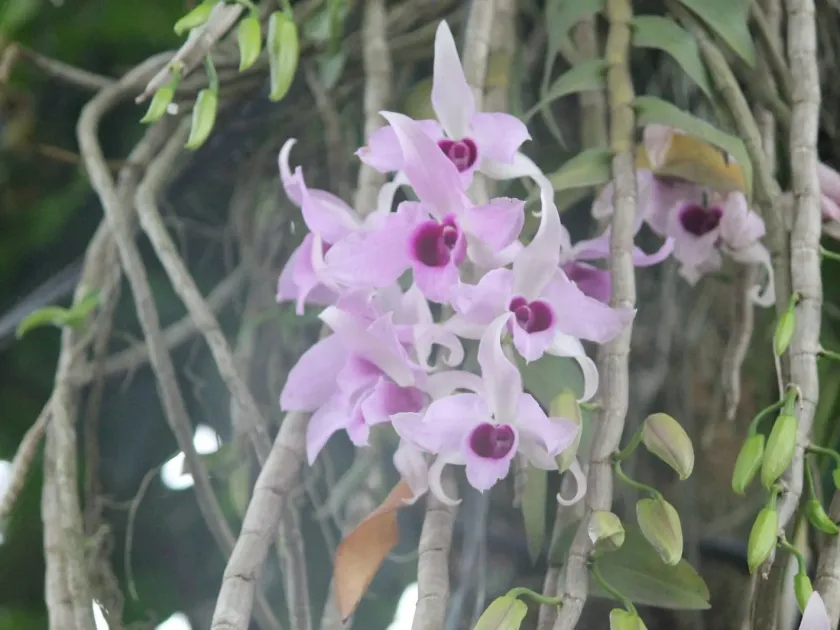
Description
Growing requirements
Dendrobium anosmum is a highly sought-after species of the Orchidaceae family, native to the tropical regions of Southeast Asia. This species is an epiphyte, typically found growing on tree branches, which defines its specific cultural requirements in domestic cultivation.
The plant thrives under bright, filtered light. Proper intensity is crucial during the active growing season to ensure that the pendulous canes mature correctly, which is a prerequisite for the prolific flowering that this species is famous for.
Temperature management requires a distinct seasonal shift. While the plant prefers warm conditions during its growth phase, it necessitates a cooler, drier period during the winter months to trigger the development of flower spikes on the leafless pseudobulbs.
Cultivation media must be loose and free-draining. A mixture of pine bark, charcoal, and perlite is generally recommended to provide the necessary airflow to the roots. Never use standard potting soil, as it will cause rapid root rot due to lack of oxygen.
Watering should be frequent during the growing season, coupled with high humidity levels. However, as the canes reach maturity and leaves begin to drop, watering must be significantly reduced to allow the plant to enter its mandatory dormancy phase.
Main diseases and pests
Common pests include scale insects and spider mites. These thrive in poorly ventilated areas with low humidity. Regular monitoring of the stems and the undersides of leaves is essential to prevent infestations from compromising plant health.
Fungal infections, such as black rot, are the most significant threats to the overall survival of the plant. These are primarily caused by stagnant water trapped in the crown or cold, wet conditions. Proper drainage and airflow are the best preventative measures.