
Cardinal larkspur
Delphinium cardinale Hook.
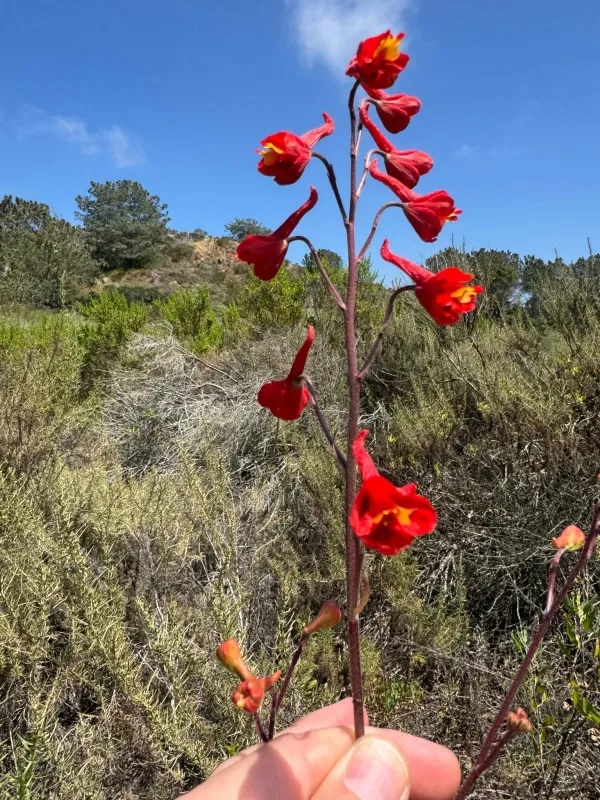
Description
Sowing dates
Seeds of Delphinium cardinale require cold stratification to break dormancy. Sowing should be done in late fall or early spring after keeping seeds in a refrigerator for several weeks.
When starting indoors, use a well-draining seed-starting mix. Cover seeds lightly, as they need some light to germinate, and keep them in a cool environment with temperatures around 15 degrees Celsius.
Transplanting seedlings requires extreme care due to the sensitive nature of the root system. Peat pots are recommended to minimize root disturbance during the transfer to the garden.
Plants should be set out in the garden only after the danger of frost has passed. Choose a location with full sun to ensure healthy growth and vibrant red flower production.
Proper spacing is crucial for airflow. Leave about 40 to 50 centimeters between individual plants to prevent the spread of fungal pathogens in the foliage.
Growing requirements
This species belongs to the Ranunculaceae family and is native to Southern California. It is highly adapted to dry, sunny environments and poor, rocky soils.
Excellent soil drainage is the most critical requirement for long-term survival. In heavy clay soils, amendments like sand or gravel must be added to prevent root rot.
Watering should be deep but infrequent, mimicking the Mediterranean climate. Allow the soil to dry out significantly between watering sessions to ensure root health.
Staking is necessary for the tall, slender flower spikes. Placing supports early in the season will prevent the stems from lodging during windy weather.
Avoid excessive fertilization, as high levels of nutrients can cause weak, spindly growth. A light application of balanced fertilizer in early spring is generally sufficient.
Main diseases and pests
Powdery mildew is a common fungal issue that affects the leaves, especially in humid or stagnant air conditions. Improve ventilation to reduce the risk of infection.
Root rot is the most dangerous condition for this species, often caused by overwatering or soil that holds too much moisture. Improving drainage is the only reliable cure.
Snails and slugs can cause significant damage to young shoots during the growing season. Use physical barriers like copper tape or organic baits to protect the plants.
Aphids often congregate on the flower buds, distorting their growth and reducing flowering. A mild soap spray or horticultural oil can be used to manage these pests.
Viral diseases, which manifest as leaf mottling or stunted growth, require immediate removal of the infected plant. There are no chemical treatments for these systemic viruses.