
Daphne transatlantica
Daphne x transatlantica C. D. Brickell & A. R. White
Description
Growing requirements
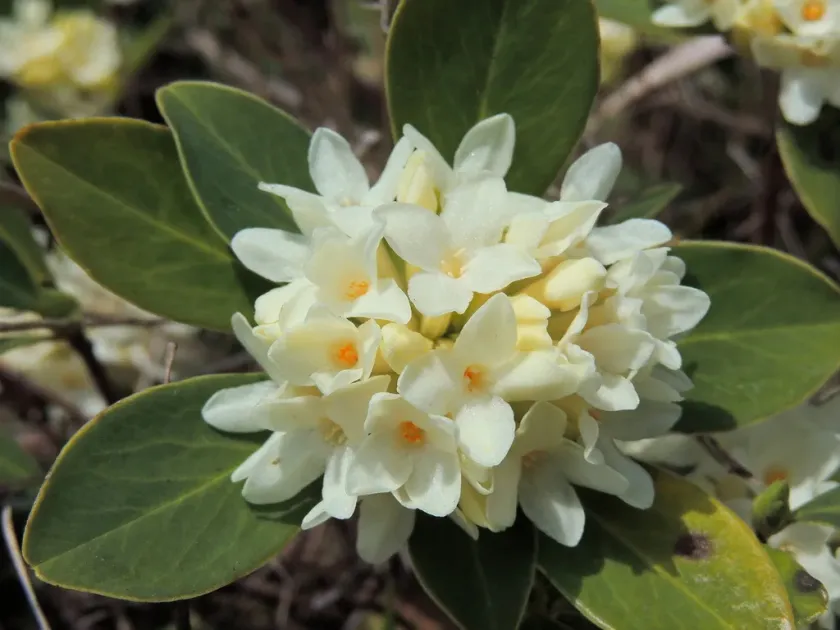
Daphne x transatlantica is a hybrid semi-evergreen shrub belonging to the Thymelaeaceae family. It is highly valued in horticulture for its dense, rounded habit and remarkably fragrant flowers that can bloom repeatedly throughout the growing season.
The plant thrives in well-drained, neutral to slightly alkaline soil conditions. Proper soil aeration is critical, as the roots are highly susceptible to rot in waterlogged environments. Adding coarse sand or gravel to the planting hole significantly improves the plant's long-term survival.
Regarding climate, this species prefers partial shade, especially in areas with intense afternoon sun. While it shows good hardiness in temperate regions, it is best to place it in a location sheltered from cold, drying winds that could damage its foliage during the winter months.
Agronomic maintenance for this shrub is minimal. It naturally grows into a compact shape and rarely requires heavy pruning. If pruning is necessary to maintain size, it should be done immediately after the first flush of flowers to avoid removing the buds for the next bloom cycle.
In terms of хозяйственного использования, this plant is a staple for garden borders, rock gardens, and container planting. Its fragrance makes it an excellent choice for placing near entrances or patio areas where the scent can be enjoyed at close range by gardeners.
Main diseases and pests
The primary threats to Daphne x transatlantica are soil-borne pathogens such as Phytophthora. These diseases are often the result of poor drainage or over-irrigation, leading to a sudden decline in the plant's health and eventual death if not managed.
Pest management involves monitoring for aphids and spider mites, which can become problematic during hot, dry spells. Keeping the plant hydrated and providing adequate air circulation around the canopy helps prevent heavy infestations and maintains the overall vigor of the shrub.