
Dahlia brevis
Dahlia brevis P. D. Sørensen
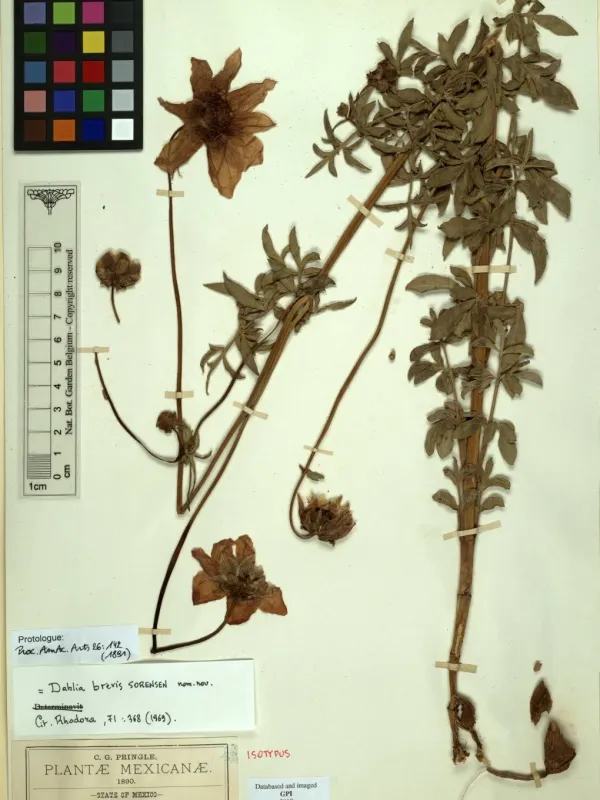
Description
Growing requirements
Dahlia brevis is a perennial herbaceous plant belonging to the Asteraceae family, recognized for its compact stature and unique biological characteristics.
Native to the mountainous regions of Mexico, this species prefers temperate climates with ample sunlight to support its vigorous vegetative growth.
The crop requires fertile, well-drained loamy soil to thrive, as excessive moisture can lead to root rot and other physiological disorders in the tubers.
Optimal agronomic practices involve maintaining soil moisture through mulching and providing necessary nutrients during the early stages of development.
Due to its low-growing habit, it is primarily used in landscaping for flower borders, rock gardens, and specialized container plant arrangements.
Main diseases and pests
Key pathogens affecting Dahlia brevis include powdery mildew and gray mold, which typically appear during periods of high humidity and poor ventilation.
Common insect pests such as aphids and spider mites can cause significant damage to the foliage, necessitating regular field monitoring and intervention.
Slugs represent a major threat during the juvenile phase of the plant, often requiring the use of protective barriers or biological controls to protect young growth.
Virus-related infections, often transmitted by sap-sucking insects, present a risk to long-term crop viability and require strict plant hygiene.
Implementing a proper crop rotation system and ensuring adequate spacing between plants are essential measures to mitigate the risk of disease outbreaks.