
Dahlia merckii
Dahlia merckii Lehm. x D. dissecta S. Watson
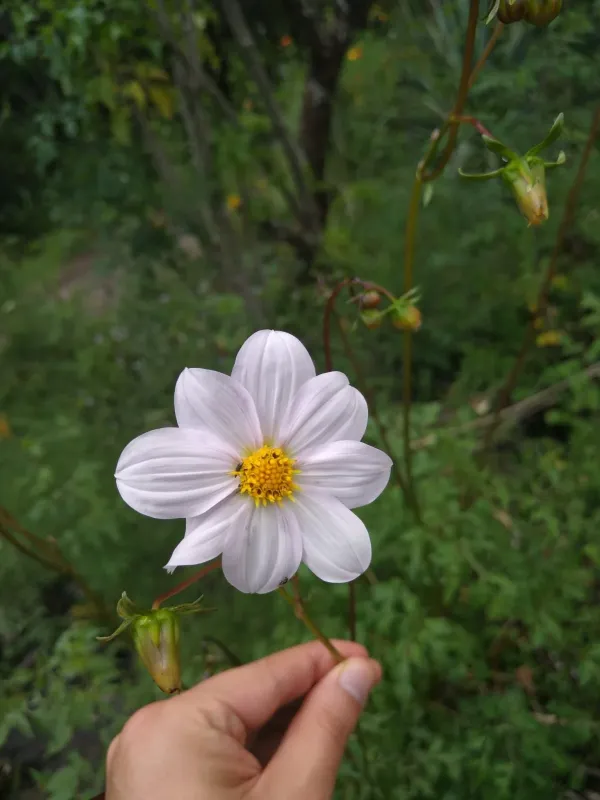
Description
Sowing dates
Dahlia merckii can be propagated from seeds, which should be sown indoors in late winter or early spring to ensure a long growing season before transplanting.
Use a well-draining seed starting mix and maintain a consistent temperature of around 20 degrees Celsius to encourage optimal germination rates.
Once the seedlings develop their first true leaves, they should be pricked out into individual pots to allow for better root development and easier handling.
Hardening off the plants is a crucial step before moving them to their permanent outdoor location, gradually exposing them to outside temperatures over two weeks.
Planting in the garden should only take place once the soil has warmed up and all risk of frost has passed, ensuring the plants establish successfully.
Growing requirements
This species thrives in locations that receive full sun for the majority of the day, which is essential for producing vibrant and healthy flowers.
Well-drained, fertile soil with a slightly acidic to neutral pH is preferred to provide the necessary nutrients while preventing waterlogged conditions.
Consistent moisture is key during the peak growing season, though the soil should never be allowed to remain soggy, as this can damage the root tubers.
Providing structural support such as stakes may be necessary, especially for taller specimens that might be vulnerable to strong winds and heavy rainfall.
Applying a balanced fertilizer periodically during the growth cycle will encourage lush foliage development and more prolific flowering throughout the summer.
Main diseases and pests
Aphids and spider mites are among the most common pests, particularly during periods of hot and dry weather when they target the succulent new growth.
Fungal diseases like powdery mildew can manifest as a white dusting on leaves, often resulting from poor air circulation or high humidity levels.
Root rot is a significant threat in poorly drained soils, making it essential to prioritize soil preparation before planting the tubers or seedlings.
Integrated pest management strategies, such as encouraging natural predators and ensuring proper spacing, can effectively mitigate most common problems.
- Regular monitoring of leaves for signs of insect infestation.
- Maintaining proper spacing to promote airflow between plants.
- Removal and destruction of any diseased plant parts immediately.
Harvesting
Seed harvesting should be conducted when the seed heads have matured and turned brown, ensuring they are thoroughly dried before storage in a cool place.
In colder climates, the tubers of Dahlia merckii must be lifted from the ground after the foliage has been blackened by the first autumn frosts.
Carefully clean the lifted tubers, remove excess soil, and allow them to cure for a few days in a shaded area to heal any surface wounds.
Store the dormant tubers in a breathable container filled with peat moss or vermiculite, keeping them in a cool, dark, and frost-free environment.
Successful overwintering of the tubers ensures a quick start for the following season, allowing the plants to thrive again once spring arrives.