
Cyphostemma waterlotii
Cyphostemma waterlotii
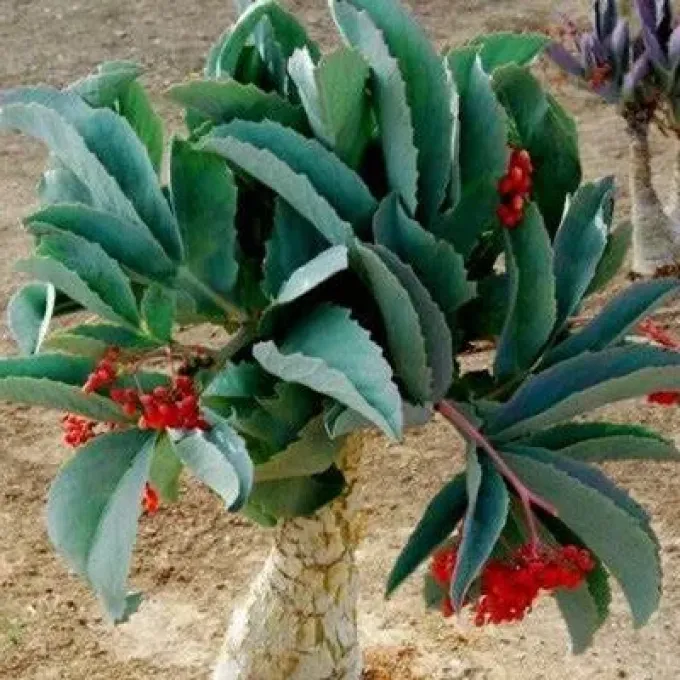
Description
Growing requirements
Cyphostemma waterlotii is a remarkable caudiciform plant belonging to the Vitaceae family. Native to Madagascar, this species is highly valued by collectors for its thick, succulent trunk (caudex) and attractive foliage that develops during the growing season.
Success in cultivation depends primarily on soil composition. The medium must be extremely porous, consisting mainly of mineral components like coarse sand, pumice, or expanded clay, to ensure rapid water drainage and root aeration.
Environmental conditions require high light intensity to prevent etiolation. If grown indoors, the plant should be placed in the brightest available spot, ideally with direct morning or afternoon sun, while ensuring good air circulation to avoid overheating.
Temperature management is crucial. During the active growth period, it prefers temperatures between 22 and 28 degrees Celsius. In the dormant period, when the plant sheds its leaves, temperatures should ideally stay above 15 degrees Celsius to protect the root system.
Irrigation practices follow a strict seasonal cycle. Water should be applied only when the substrate is completely dry. Overwatering is the most common cause of failure, as the plant stores moisture in its caudex, making it susceptible to rot in waterlogged conditions.
Main diseases and pests
The primary threats to Cyphostemma waterlotii are fungal infections and root rot. These are almost exclusively caused by improper watering regimes or stagnant, non-draining soil mixes that trap moisture around the caudex base.
Spider mites pose a significant threat to the foliage. These pests thrive in dry, stagnant air and can cause severe damage to the plant's photosynthetic capability. Regular monitoring of the underside of leaves is recommended for early detection.
Mealybugs are another common pest that tends to hide in leaf axils and crevices of the stem. Their presence often requires systemic insecticide treatments or careful physical removal with alcohol-dipped swabs.
Preventive maintenance involves keeping the plant area clean and ensuring that no debris remains on the soil surface, as this can harbor fungal spores and pests. Proper ventilation is the best natural defense against most indoor plant threats.
If rot is detected, immediate surgical excision of the infected tissue is necessary, followed by the application of sulfur or a fungicide. The plant should then be kept in a dry, warm place to callus before any further watering is attempted.