
Cyphostemma bainesii
Cyphostemma bainesii
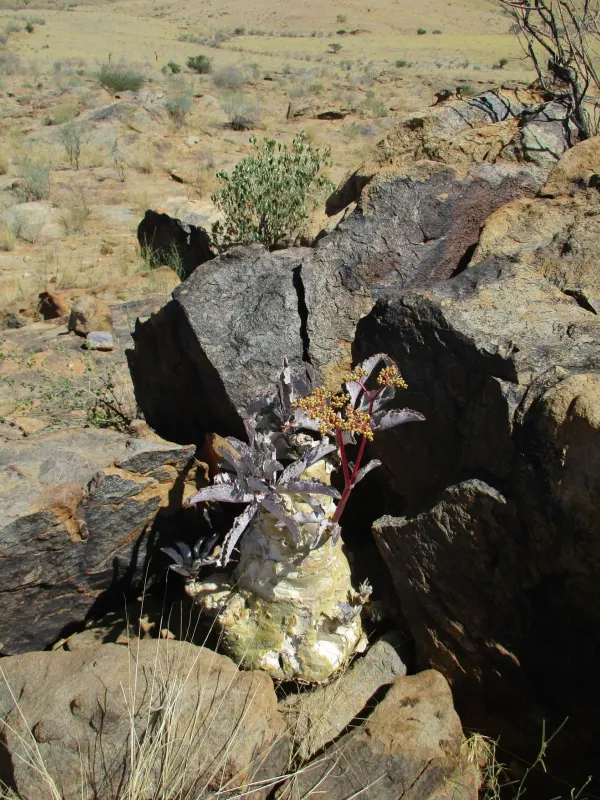
Description
Growing requirements
Cyphostemma bainesii is an intriguing caudex succulent belonging to the Vitaceae family. It originates from the arid regions of Namibia and South Africa, where it has evolved to store water within its swollen, succulent stems.
The plant demands high light intensity to maintain its compact form and health. In cultivation, it thrives best in direct sunlight, especially during its active growing season, which prevents the stem from etiolating.
A well-draining, gritty soil mix is non-negotiable for this species. A combination of coarse sand, perlite, and a small amount of organic substrate ensures that water does not sit around the sensitive root system.
Watering requires careful management: it should be frequent during the warm months but almost completely withheld during the winter dormancy period. The soil must dry out entirely between waterings to prevent root rot.
Regarding climate, it prefers warm temperatures and low humidity. It is sensitive to frost and should be kept in a climate-controlled environment where temperatures remain stable and above 10 degrees Celsius.
Main diseases and pests
The most common threat to Cyphostemma bainesii is root and stem rot caused by overwatering or poor drainage. Once the caudex begins to rot, it is notoriously difficult to save the specimen.
Spider mites are a persistent pest, especially in dry, indoor environments. They frequently infest the undersides of the leaves, drawing sap and causing the foliage to yellow and drop prematurely.
Mealybugs can also pose a significant problem, as they hide in the crevices of the plant's bark and foliage. Regular inspection and localized treatment with systemic insecticides are recommended.
Fungal infections can occur if the plant is kept in an area with stagnant, humid air. Increasing air circulation is a simple but effective strategy to keep the plant healthy and pathogen-free.
Effective pest management involves a combination of mechanical removal and chemical control. Always ensure that the chemicals used are safe for succulent species to avoid phytotoxic damage.