
Cyphostemma betiforme
Cyphostemma betiforme
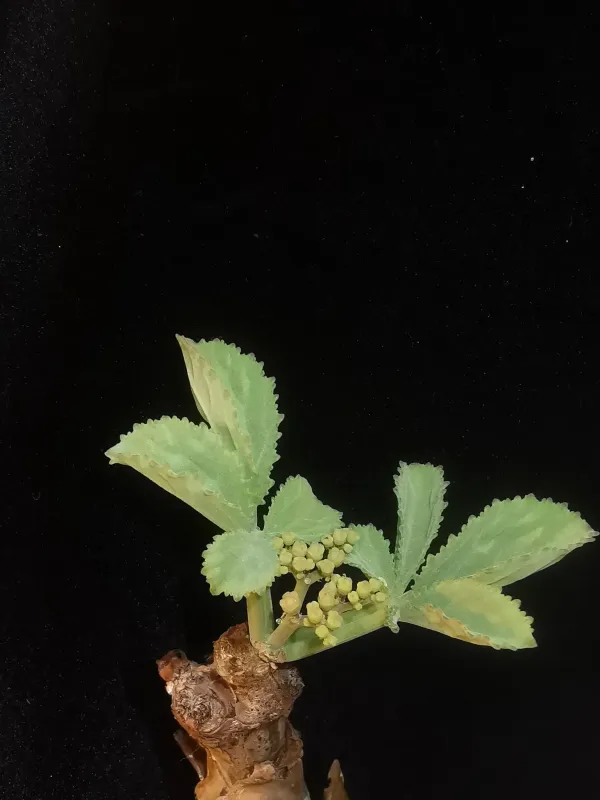
Description
Growing requirements
Cyphostemma betiforme is a remarkable succulent species belonging to the Vitaceae family. Originating from the arid regions of Ethiopia and Somalia, this plant has evolved to survive in extreme drought conditions, making it a true desert survivor.
The plant features a prominent, thickened stem known as a caudex, which functions as a water reservoir. Its foliage is characterized by distinctive textures and slight pubescence, which serves as a protective mechanism against intense UV radiation and moisture loss in its native habitat.
For cultivation, the substrate must be highly porous and mineral-based. A mix of pumice, coarse sand, and a minimal amount of potting soil is recommended to ensure that water drains away quickly and roots remain aerated at all times.
Regarding climate, Cyphostemma betiforme thrives in warm, well-lit environments. It requires significant bright light to maintain its compact growth form. During the dormant winter period, it is essential to keep the plant dry and provide a slightly cooler temperature to mirror its natural cycle.
In terms of human use, this species is highly valued in the nursery industry and among succulent collectors. It serves as a specimen plant, appreciated for its architectural form, rarity, and the specific aesthetic it adds to arid plant collections.
Main diseases and pests
The most common threat to this plant is root and stem rot. These fungal issues are almost always caused by improper irrigation habits, especially when the soil remains damp for too long during lower temperature periods.
Pests such as spider mites and mealybugs can infest the plant, particularly in greenhouses with poor ventilation. These insects sap the energy from the plant, potentially leading to weakened growth or systemic infection if left untreated.
To prevent these threats, maintaining a clean growing environment is crucial. Periodic inspections of the leaf undersides and the base of the caudex can help catch issues early before they become life-threatening to the specimen.
Physiological distress often manifests as stunted growth or etiolation. If the plant does not receive sufficient sunlight, it will stretch uncontrollably, becoming prone to mechanical damage and further increasing susceptibility to pathogens.
Effective management includes using sterilized tools during repotting and ensuring that water never touches the crown or the caudex directly, as trapped moisture creates perfect conditions for bacterial development.