
Cyphostemma uter
Cyphostemma uter
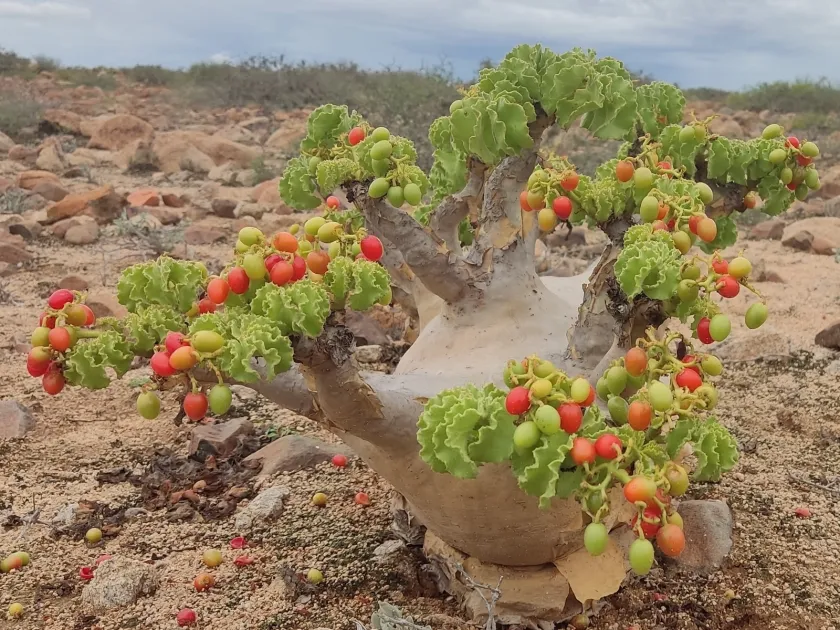
Description
Growing requirements
Cyphostemma uter is a remarkable succulent species within the Vitaceae family, native to the arid desert regions of Namibia and Angola. It is highly valued by collectors for its thick, swollen caudex, which functions as a specialized water storage organ for surviving extreme desert droughts.
This species requires high light intensity to maintain its characteristic compact habit. Exposure to direct sunlight for most of the day is essential, especially during the active growing season, to prevent etiolation and promote healthy development of the fleshy trunk and foliage.
The substrate must be highly porous and inorganic-heavy to ensure rapid drainage. A mix containing coarse sand, pumice, and grit, with minimal organic matter like peat or leaf mold, provides the necessary environment to protect the roots from the common threat of asphyxiation.
During the active growth phase, Cyphostemma uter thrives in temperatures between 22 and 32 degrees Celsius. During the winter dormancy period, when the plant sheds its leaves, it should be kept in a cooler, dry environment with temperatures maintained between 12 and 15 degrees Celsius.
Irrigation practices must be cautious, following the dry-wet cycle principle. Water should only be applied when the substrate is completely dry to the bottom, and during the dormant winter period, watering should be severely restricted or paused entirely to prevent tissue rot.
Main diseases and pests
The most severe threats to Cyphostemma uter are fungal and bacterial rots, which usually originate from waterlogged soil or poor aeration, quickly compromising the health of the delicate root system.
Mealybugs are common pests that tend to hide within the crevices of the succulent stem. Their presence can stunt growth and introduce secondary viral infections, requiring manual removal or systemic insecticides.
Spider mites can become problematic if the surrounding environment is persistently dry and lacking in ventilation. These pests damage the epidermis of the leaves and green stems, leading to weakened plant health.
Improper fertilization, particularly high nitrogen concentrations, results in soft, succulent growth that is highly susceptible to pests and mechanical stress. Balanced, low-nitrogen fertilizers are recommended only during the peak growing season.
Monitoring the firmness of the caudex is crucial; any soft or discolored patches should be inspected immediately, as they often serve as the first visual indicator of developing internal rot or pest infestation.