
Cyphostemma rubrosetosa
Cyphostemma rubrosetosa
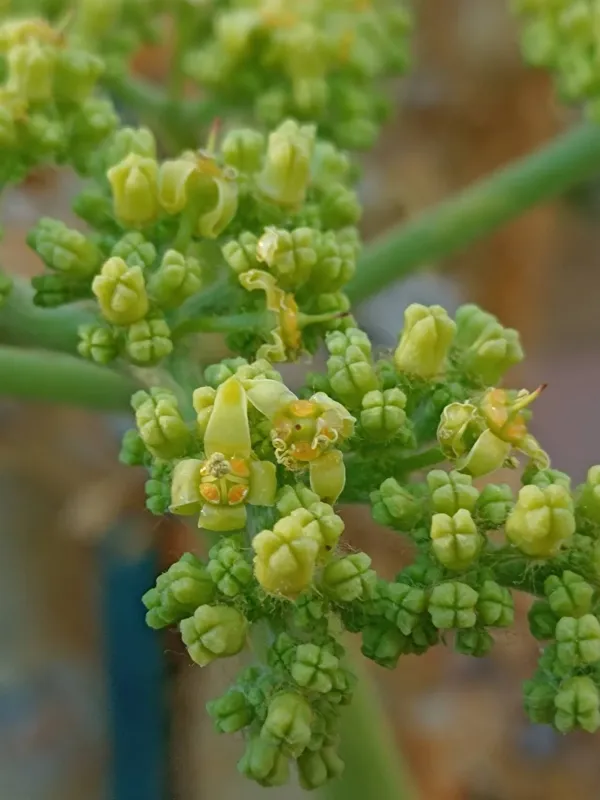
Description
Growing requirements
Cyphostemma rubrosetosa is a striking succulent belonging to the Vitaceae family, native to the arid regions of Eastern Africa. It is highly regarded by enthusiasts for its unique, tuberous, or thickened stem, known as a caudex, which stores water for dry seasons.
This species requires high light intensity to thrive and maintain its natural morphology. In a cultivation environment, it should be placed in a sunny position, ideally in a greenhouse or a south-facing window, ensuring it receives several hours of direct sunlight daily.
The substrate must be exceptionally well-draining, consisting of a mix of coarse grit, perlite, and a small portion of organic matter. The goal is to ensure that water passes through the pot rapidly, preventing any risk of saturation around the roots and the base.
Temperature requirements include keeping the plant warm during the active growing season. During the winter, it is crucial to protect the plant from freezing temperatures, maintaining a dry environment to induce dormancy, which is vital for its long-term health.
As an ornamental plant, it serves as a center-piece in succulent collections. Its leaves are covered in distinct reddish bristles, which give the plant its specific name and contribute to its high aesthetic value among collectors.
Main diseases and pests
The primary threat to Cyphostemma rubrosetosa is waterlogging, which often leads to lethal root rot. Once the rot reaches the caudex, the plant is difficult to save, making strict water management the most important aspect of its maintenance.
Mealybugs are common pests that thrive in the hidden spaces of the foliage and stem. Due to the presence of reddish bristles, these pests can be difficult to spot and even harder to remove without damaging the plant's surface.
Poor ventilation can promote fungal infections, especially when humidity levels remain high during the dormant phase. Providing adequate airflow is essential to keep the plant vigorous and free from damp-related diseases.
Spider mites may affect the plant under very dry and hot conditions, leading to discolored or speckled foliage. Frequent inspection of the leaves and occasional misting can help identify and manage infestations before they become severe.
For chemical control, contact pesticides should be used carefully, as the delicate bristles and succulent skin may react negatively to heavy applications. Always test on a small area first before treating the entire plant.