
Cyphostemma ornatum
Cyphostemma ornatum
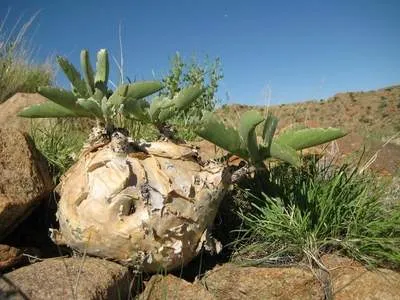
Description
Growing requirements
Cyphostemma ornatum is a striking caudex-forming succulent belonging to the Vitaceae family. It is native to the arid regions of Africa, where it has evolved to thrive in rocky environments and nutrient-poor soils that offer excellent drainage.
Cultivating this species requires intense, direct sunlight to maintain its compact and robust form. Without adequate light, the plant tends to become etiolated, resulting in weak, elongated stems that lose their aesthetic value.
The substrate must be highly porous. A mixture of pumice, coarse sand, and a small amount of organic loam is ideal. Efficient drainage is critical to preventing the succulent caudex from absorbing excessive moisture, which leads to rot.
Temperature management is vital. During the active growing season, it prefers temperatures ranging from 22°C to 28°C. In the winter dormancy phase, the plant should be kept in a cooler, dry location, ideally around 15°C.
Proper airflow is an often overlooked aspect of the cultivation of this species. Good ventilation helps to dissipate heat and reduces the risk of fungal infections that can plague the thick, fleshy tissues of the plant.
Main diseases and pests
The most significant threat to Cyphostemma ornatum is root rot caused by stagnant water in the soil. If the caudex starts to feel soft to the touch, the plant requires an immediate emergency repotting into a drier substrate.
Pests such as mealybugs and spider mites are common in greenhouse conditions. They thrive in dry, stagnant air and can cause significant damage to the leaves and young, tender growth of the plant.
- Regular monitoring of the underside of leaves for webs or white cottony masses.
- Application of systemic insecticides suitable for succulents.
- Maintaining optimal humidity levels to deter mite populations.
- Isolation of new plants to prevent spreading potential infestations.
- Using preventative fungicidal treatments during seasonal transitions.
Proper sanitation is essential for pest management. Removing fallen, dead leaves and debris from the base of the plant reduces the habitats where pests and fungal spores can accumulate.
Environmental stress, such as extreme temperature fluctuations or improper watering, weakens the plant's natural defenses, making it more susceptible to secondary viral or bacterial infections.