
Cyphostemma laza
Cyphostemma laza
Description
Growing requirements
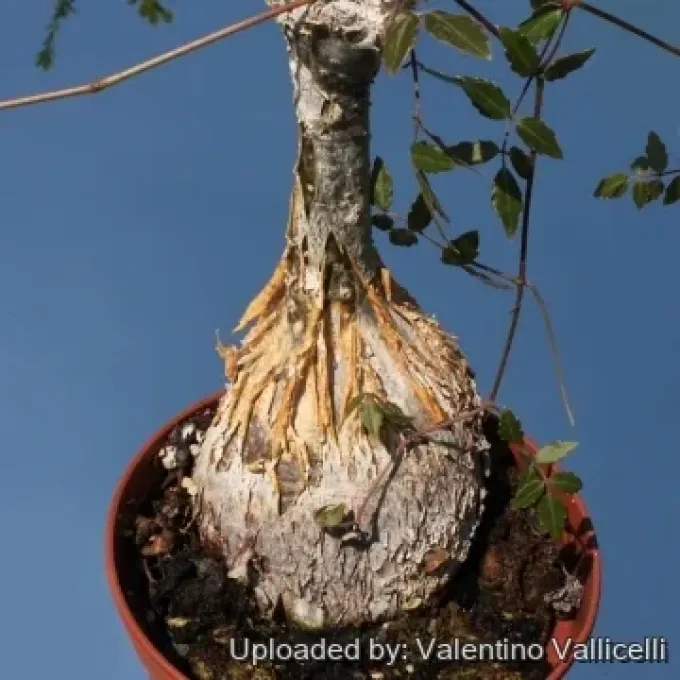
Cyphostemma laza is a distinctive caudiciform succulent belonging to the Vitaceae family. Native to the rugged landscapes of Madagascar, this species is highly valued by collectors for its thick, swollen stem (caudex) and attractive, often deciduous foliage.
The plant thrives in environments that mimic its natural habitat. It requires a significant amount of bright, direct sunlight to maintain its structural integrity. In an indoor setting, a south-facing window or high-output supplementary lighting is strictly necessary.
Soil composition is the most critical aspect of its cultivation. The ideal growing medium must be highly porous, consisting mainly of inorganic components like volcanic rock, perlite, and coarse sand, with very minimal organic matter to ensure rapid drainage.
Watering protocols must follow the seasonal rhythm of the plant. During the active growing season, water should be applied only when the soil has completely dried out. Once the leaves begin to yellow in autumn, watering must be drastically reduced to induce dormancy.
Temperature management is equally important. Cyphostemma laza prefers warm conditions during the summer (22–30°C) but requires a cool, dry rest period during the winter months, typically around 12–15°C, to prevent unnatural growth during low light levels.
Main diseases and pests
The primary threat to the health of Cyphostemma laza is root rot, caused by overwatering or poor soil drainage. Once the moisture level remains too high, the caudex becomes susceptible to fungal pathogens that can destroy the plant from the inside out.
Common pests include spider mites and mealybugs. Spider mites are particularly troublesome in low-humidity environments, as they feed on the underside of leaves, causing discoloration and eventual leaf drop if left untreated.
Mealybugs often infest the growing points and junctions between the stem and leaves. Their presence can be identified by a white, cotton-like substance, which requires prompt removal with a cotton swab soaked in isopropyl alcohol.
Prevention is centered on good air circulation and regular inspection. Avoiding water contact with the stem during the dormancy period is crucial, as damp skin is a breeding ground for various opportunistic infections.
If the plant shows signs of soft spots on the caudex, immediate action is required. This often involves unpotting the plant, inspecting the roots, cutting away necrotic tissue, and replanting in a completely dry, sterilized mineral substrate.