
Cyphostemma juttae
Cyphostemma juttae
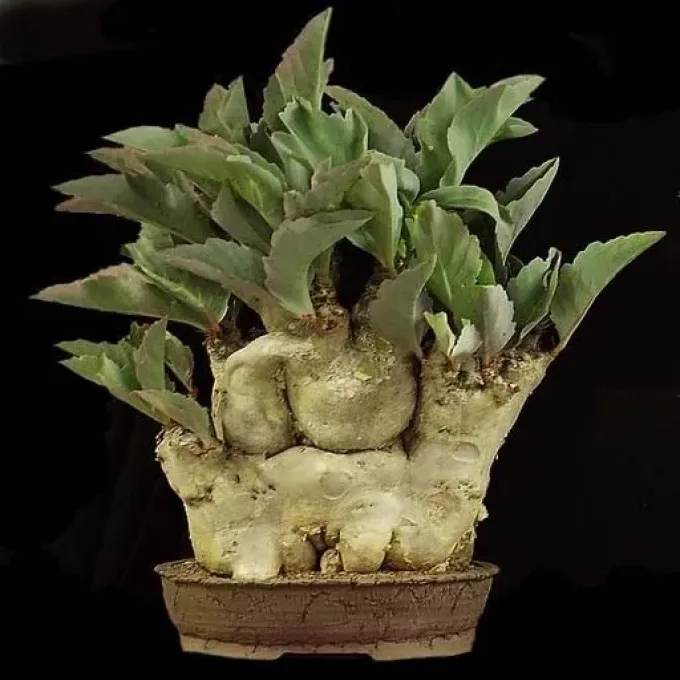
Description
Sowing dates
Propagation of this species is typically achieved through seeds, which require a warm environment and high-quality, well-draining soil media.
Seeds should be sown in the spring when ambient temperatures are consistently high to promote rapid germination and early growth development.
It is recommended to use a sterile substrate mixed with fine grit to prevent damping-off diseases, which are common in succulent seedlings.
Young plants require gradual exposure to direct sunlight to ensure they develop a healthy, compact caudex rather than becoming etiolated.
Cutting propagation is technically possible but significantly more challenging due to the plant's succulent nature and slow recovery rate.
Growing requirements
Belonging to the Vitaceae family, this species is native to the arid regions of Namibia and is highly adapted to extreme temperature fluctuations.
Full sun exposure is a critical requirement for this plant; it thrives in bright, intense light which is essential for maintaining its structural integrity.
The soil profile should mirror its natural habitat, requiring highly porous, mineral-rich mixtures with little to no organic peat content.
Watering must be performed with caution, strictly observing the seasonal growth cycle where the plant remains largely dormant during winter.
Proper airflow is as vital as soil composition, ensuring that humidity levels remain low around the caudex to simulate desert conditions.
Main diseases and pests
The primary threat to the health of this plant is overwatering, which quickly leads to root rot and fatal decay of the main trunk.
Common pests include mealybugs and spider mites, which can easily infest the plant, especially if it is kept in stagnant, dry air.
Routine inspections of the foliage and the crown of the caudex are recommended to detect any signs of pest activity at an early stage.
Systemic insecticides should be applied sparingly, following strict instructions to avoid damaging the succulent skin of the plant.
Fungal pathogens can also pose a risk if the plant is kept in humid environments with poor light, often resulting in soft tissue lesions.