
Cyphostemma jiguu
Cyphostemma jiguu
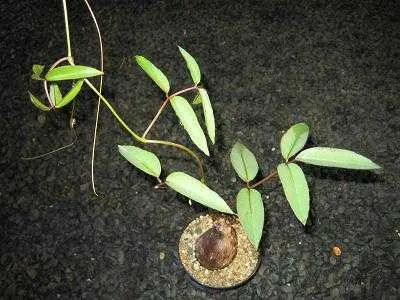
Description
Sowing dates
Propagation of Cyphostemma jiguu is typically performed through seeds sown in early spring to leverage the natural increase in day length. Success depends on the freshness of the seeds, as their viability decreases relatively quickly over time.
The sowing medium must be highly porous, consisting of coarse sand, pumice, and minimal organic matter. Proper aeration of the substrate is vital to prevent seedling damping-off, a common issue in succulent propagation.
Seeds should be covered with a thin layer of fine gravel to stabilize the root collar. Maintaining a consistent temperature between 25 and 28 degrees Celsius is essential for uniform germination, often requiring the use of a heat mat.
Once seedlings emerge, they require bright, indirect light to grow steadily without stretching. Overwatering at this stage is the most significant risk, so keeping the soil barely moist but not waterlogged is key.
Transplanting into individual pots should only occur after the plant has developed a healthy root system and at least two pairs of true leaves. Transitioning to a standard succulent mix should be gradual to avoid transplant shock.
Growing requirements
Cyphostemma jiguu belongs to the Vitaceae family and is recognized for its unique, fleshy caudex that serves as a reservoir during extended droughts. Native to Eastern Africa, it is highly adapted to arid environments.
Light is the most important factor for this species, as it requires full sun to maintain its characteristic compact shape and healthy tissue development. In low light, the plant will become leggy and lose its aesthetic appeal.
The soil requirements are strict: the mixture must be exceptionally well-draining, such as a combination of grit, pumice, and a small amount of sandy loam. Dense soils that retain water will almost certainly cause rot.
Watering frequency should be aligned with the plant's growth cycle. During the growing season, water deeply but allow the soil to dry out completely between applications. During winter dormancy, keep the plant almost entirely dry.
Air circulation is crucial for the health of the plant, especially in home or greenhouse environments. It thrives in warm temperatures but appreciates a drop in temperature during the night to mimic its natural habitat.
Main diseases and pests
Root rot, caused by fungal pathogens in the soil, is the primary threat to Cyphostemma jiguu. This is almost exclusively triggered by overwatering, poor drainage, or cold and damp conditions during the dormant period.
Spider mites are the most common pests, thriving in the dry air conditions that the plant generally prefers. They can quickly damage the foliage, causing stippling and reducing the plant's photosynthetic capacity.
Effective management of these threats involves routine inspections and the prompt application of systemic insecticides or miticides when an infestation is detected. Keeping the plant in a clean environment reduces the risk of recurrence.
If rot is detected, immediate action is necessary. Remove the plant from the pot, cut away all mushy tissue, apply a fungicide to the wounds, and allow the plant to callous over before replanting it in dry, fresh soil.
Preventive maintenance includes ensuring the plant never sits in standing water and that the pots have ample drainage holes. Maintaining good hygiene by cleaning gardening tools helps prevent the spread of infections.