
Cyphostemma jatrophoides
Cyphostemma jatrophoides
Description
Growing requirements
Cyphostemma jatrophoides is a remarkable caudiciform succulent species belonging to the Vitaceae family. It is native to the arid regions of southwestern Africa, where it has evolved unique physiological adaptations to thrive in harsh, rocky environments.
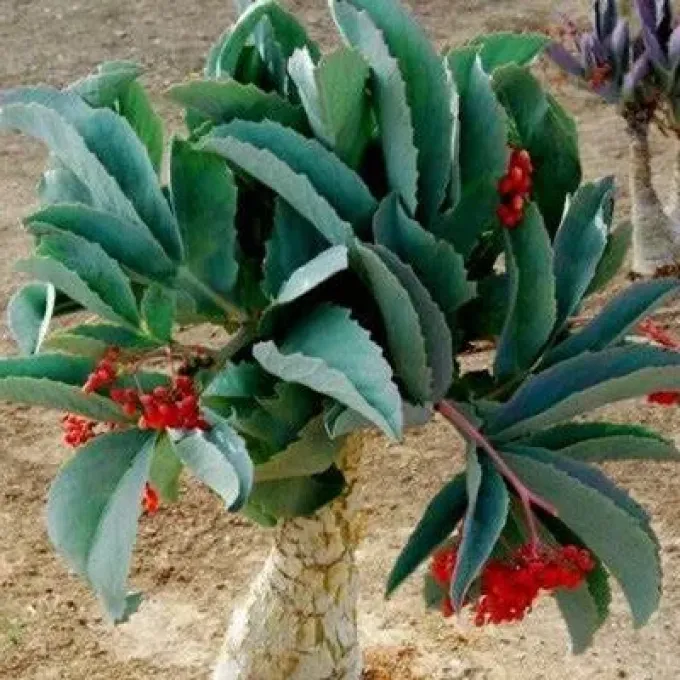
The defining characteristic of this plant is its distinct succulent caudex, which functions as a water storage organ. The foliage consists of long-petioled leaves that resemble those of the Jatropha genus, providing an interesting aesthetic profile for collectors.
For successful growth, the substrate must be highly porous and inorganic. A mixture composed largely of pumice, coarse grit, and a small portion of sandy loam ensures excellent drainage, preventing moisture accumulation around the sensitive base.
High light intensity is crucial for maintaining the plant's natural morphology. A sunny windowsill or a greenhouse setting is required to ensure proper growth and to prevent the plant from becoming etiolated or weak during the growing season.
Watering requirements follow a strict seasonal cycle. During the growing period, water only when the substrate is completely dry. In winter, the plant undergoes a dormant phase, during which it sheds its leaves and requires little to no water.
Main diseases and pests
The primary threat to Cyphostemma jatrophoides is root and caudex rot caused by overwatering or poor drainage. Once internal tissue decay begins, it is notoriously difficult to reverse, making preventive care essential.
Pests are generally limited to common indoor succulent threats such as spider mites and mealybugs. These are best managed through frequent monitoring and the application of appropriate contact insecticides or horticultural oils.