
Cyphostemma gillettii
Cyphostemma gillettii
Description
Growing requirements
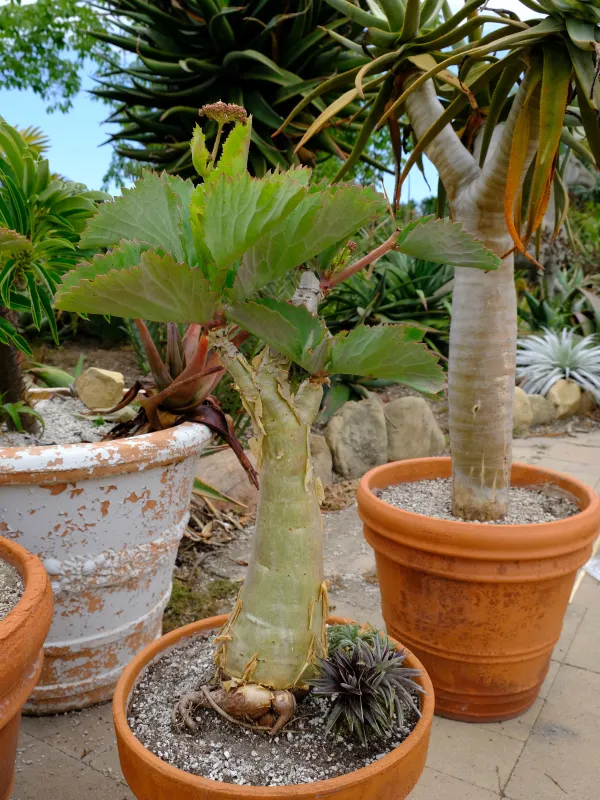
Cyphostemma gillettii is a distinctive caudex-forming succulent species belonging to the Vitaceae family. Native to the arid regions of Somalia, it has adapted to harsh desert environments by developing a swollen, water-storing base known as a caudex.
The plant requires high light conditions to thrive. Intense sunlight is essential for maintaining the structural integrity of the plant and preventing etiolation, which can weaken the succulent tissue.
Soil requirements for this species are strict. It demands a highly porous, gritty substrate that ensures rapid drainage. A mix comprising pumice, perlite, and coarse sand with minimal organic matter is considered optimal for root health.
Temperature management is crucial. During the active growing season, temperatures between 25°C and 35°C are ideal. During dormancy, the plant must be kept dry and in temperatures not falling below 15°C.
Watering should be approached with caution. During the peak of the growth season, water sparingly, allowing the soil to dry out completely between sessions to mimic the sporadic rainfall of its native habitat.
Main diseases and pests
The primary threat to Cyphostemma gillettii is root rot, frequently caused by overwatering or the use of improper, water-retentive potting media that restricts oxygen flow to the roots.
Insect pests, including mealybugs and spider mites, can become an issue if the plants are kept in stagnant air conditions or if the overall hygiene of the cultivation area is poor.
Monitoring for signs of tissue softening or discoloration on the caudex is necessary, as these are often indicators of internal decay or fungal infections.
Cultural control, such as ensuring sufficient airflow and avoiding overhead watering, is the most effective way to prevent the spread of diseases within a collection.
When chemical interventions are required, it is advisable to use systemic pesticides compatible with succulent species to avoid phytotoxic damage to the delicate skin of the caudex.