
Cyphostemma currorii
Cyphostemma currorii
Description
Growing requirements
Cyphostemma currorii is a distinctive succulent shrub belonging to the Vitaceae family. Native to the arid regions of Namibia and Angola, this plant is well-adapted to harsh desert environments.
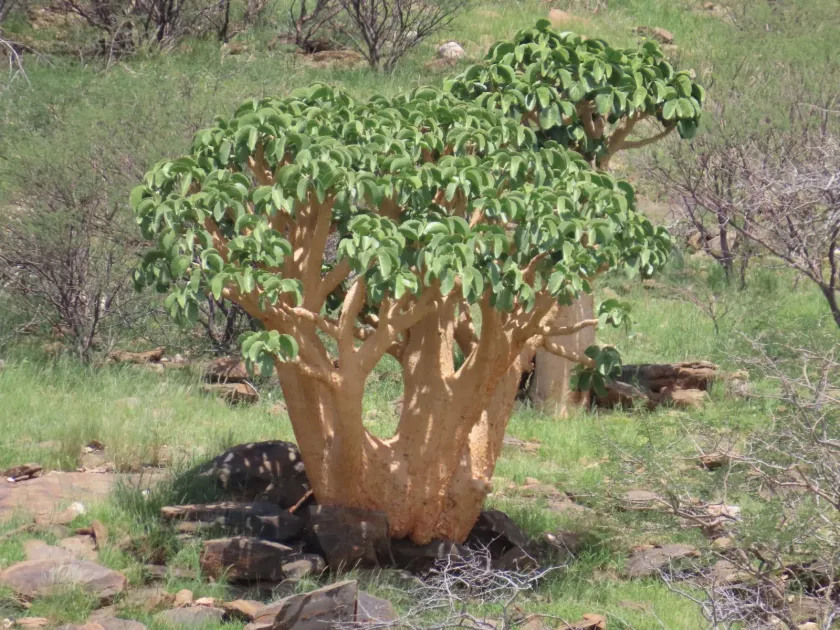
Botanically, it is recognized by its thickened, water-storing caudex trunk, which is protected by a peeling, paper-like bark. Its complex, fleshy leaves provide a unique visual appeal during the active growing season.
To cultivate this species successfully, one must provide intense direct sunlight and a highly porous, well-draining soil mixture. The soil should be predominantly mineral-based, consisting of sand, pumice, and gravel to prevent water stagnation.
Temperature management is critical; the plant thrives in warm, sunny conditions during its active phase but requires a dry, cool rest period during the winter months when growth naturally slows down.
The primary use of Cyphostemma currorii is ornamental. It is highly valued by succulent enthusiasts and collectors for its sculptural form, making it a centerpiece in specialized indoor or greenhouse collections.
Main diseases and pests
The most significant threat to the health of Cyphostemma currorii is root rot, which is almost exclusively caused by overwatering or soil that lacks proper aeration and drainage properties.
Mealybugs are the most common pests found on this plant. They tend to hide in the cracks of the exfoliating bark and at the base of the petioles, requiring careful inspection and prompt removal.
Spider mites can become a nuisance if the plant is kept in an environment with very low humidity and poor air circulation, particularly in indoor settings during the dormant season.
Fungal infections can develop on the surface of the caudex if the plant is exposed to excessive humidity and stagnant air, leading to tissue necrosis that is difficult to treat.
A proactive care strategy involves ensuring excellent airflow around the plant, minimizing moisture during cool periods, and using appropriate horticultural oils or soaps if a pest infestation is confirmed.