
Cyathea manniana
Cyathea manniana
Description
Growing requirements
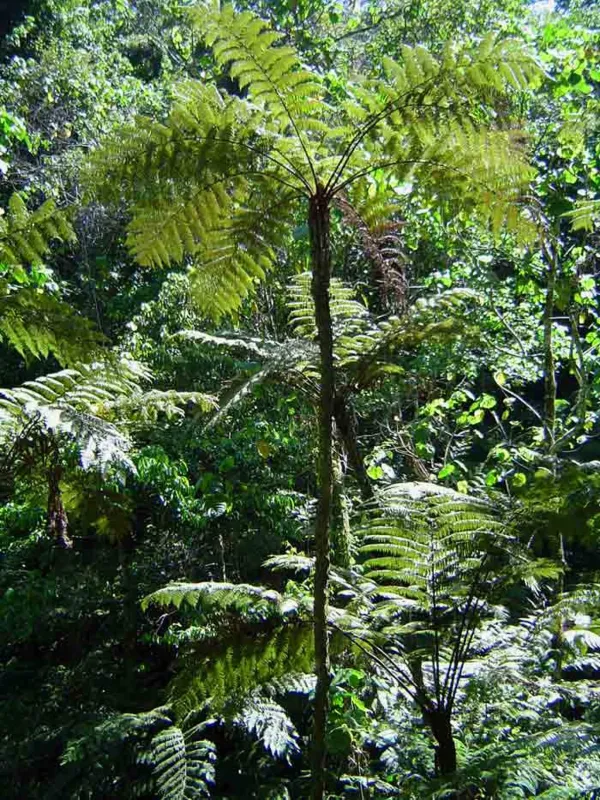
Cyathea manniana is a striking tree fern belonging to the Cyatheaceae family. It is characterized by its tall, sturdy trunk and large, feathery fronds that can grow quite extensive in favorable tropical conditions, creating a canopy effect.
The species originates from the moist mountain forests of Africa, particularly within the mountainous regions of Cameroon. It thrives in high-altitude environments where moisture levels are consistently high and the temperature remains relatively stable throughout the year.
For cultivation, Cyathea manniana requires a well-draining, organic-rich substrate that mimics forest floor debris. It is crucial to maintain a consistent moisture level in the soil without allowing the roots to sit in water, which could lead to root rot.
Light requirements for this fern involve dappled shade or indirect sunlight. Direct exposure to harsh midday sun should be avoided at all costs, as the delicate structure of the fronds is highly susceptible to scorching and dehydration.
In terms of хозяйственное использование, this plant is primarily utilized as a showpiece in professional conservatories and specialized botanical collections. Its prehistoric appearance makes it highly sought after by collectors of exotic plant species.
Main diseases and pests
Common threats to Cyathea manniana include poor ventilation and low ambient humidity, which are the primary causes of frond dieback. Without regular misting or proper humidity control, the plant will struggle to maintain its foliage.
Pests such as spider mites, scale insects, and mealybugs represent the main biological threats. These pests flourish in indoor environments where natural predators are absent, potentially causing significant damage to the plant's health.
Fungal diseases are a significant risk, particularly those affecting the crown or the base of the trunk. Such infections are usually the result of overwatering or splashing water directly into the center of the crown where new fronds emerge.
Effective management includes maintaining a rigorous observation schedule to detect infestations early. If pests are identified, mechanical removal or the application of gentle horticultural oils is often the first line of defense.
To ensure long-term health, ensure that the plant has ample space for air circulation. A stagnant, humid environment without proper airflow is an ideal breeding ground for pathogens that can compromise the structural integrity of the fern.