
Cyathea borbonica
Cyathea borbonica
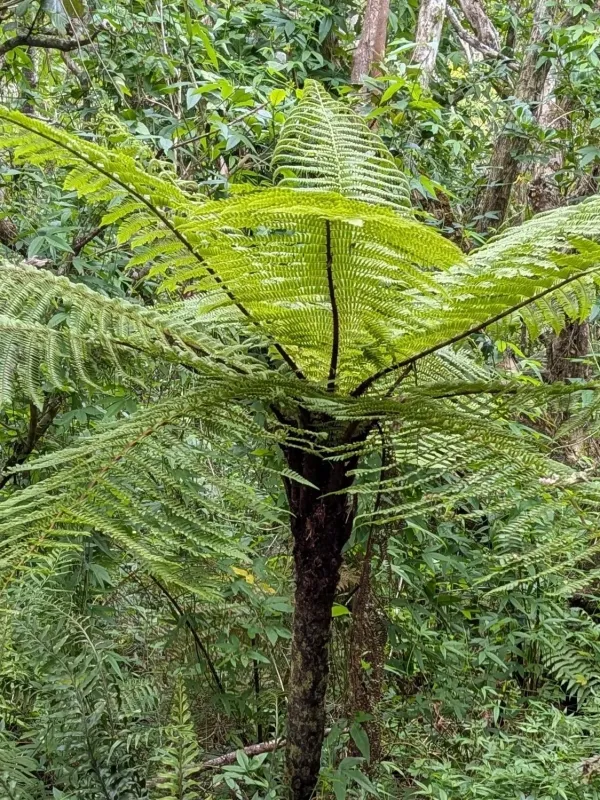
Description
Growing requirements
Cyathea borbonica is a member of the Cyatheaceae family, renowned for its status as a spectacular tree fern. In its natural habitat, this plant develops a distinct trunk formed by old leaf bases, topped with a crown of large, bipinnate fronds.
Native to the humid rainforests of Reunion and Mauritius, this species thrives in high-altitude environments. When cultivated, it requires a stable, humid climate that mirrors the cool, moist conditions of its original tropical habitat.
The substrate for Cyathea borbonica must be highly porous and moisture-retentive. A mixture of peat, tree bark, and leaf mould is recommended to provide sufficient aeration for the roots while maintaining a slightly acidic pH level.
Humidity management is the most critical aspect of caring for this fern. Levels should consistently stay above 70–80%. If the air becomes too dry, the fronds will begin to brown at the edges, leading to a permanent loss of vigor.
Regarding light requirements, Cyathea borbonica prefers bright, indirect light. Dappled shade is optimal, as the intensity of direct midday sun can easily scorch the delicate foliage and damage the plant's structural integrity.
Main diseases and pests
Spider mites represent a major threat to this tree fern, particularly in indoor environments where the air may occasionally dry out. Keeping the foliage misted and maintaining proper ventilation helps prevent mite infestations.
Root rot is a common physiological problem resulting from improper drainage or overwatering. It is essential to ensure that the potting medium never becomes waterlogged, as the roots require a balance of moisture and airflow.
Mealybugs can often be found tucked into the base of the fronds, where they feed on the sap. Regular monitoring and the application of horticultural oils or insecticidal soap are necessary for effective control.
Scale insects are another potential pest that can weaken the plant over time. Because they form a protective shell, physical removal combined with chemical treatment is the most efficient way to manage their populations.
Nutrient deficiencies or excessive mineral salt buildup in the soil can stunt the growth of the fern. Using a balanced, weak liquid fertilizer specifically formulated for ferns during the growing season is the safest approach to fertilization.