
Cyathea crinita
Cyathea crinita
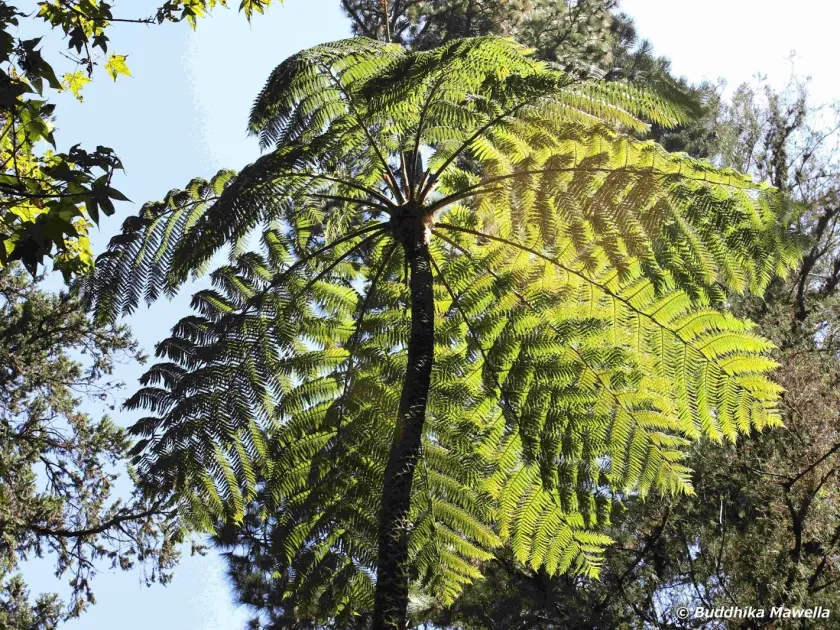
Description
Growing requirements
Cyathea crinita is a majestic tree fern species belonging to the Cyatheaceae family. Native to the mountain forests of Sri Lanka and southern India, this plant thrives in cool, humid environments found at high altitudes, typically between 1500 and 2000 meters above sea level.
Botanically, the plant is characterized by its stout trunk, which can grow to significant heights, and its large, arching fronds. The specific epithet "crinita" refers to the long, hair-like scales that cover the stipes and the trunk, providing a distinct texture to the plant's appearance.
The cultural requirements are strict, demanding a high-humidity environment and stable, cool-to-temperate temperatures. It does not tolerate extreme heat or direct, harsh sunlight. In cultivation, it is best suited for conservatories or professional glasshouses where atmospheric moisture can be controlled.
The growing medium must be highly porous and moisture-retentive, mirroring the organic-rich debris found on the forest floor. A mixture of peat, tree bark, and perlite is often used to ensure excellent drainage, as the root system is highly sensitive to waterlogging and compaction.
Regarding its economic utility, Cyathea crinita is primarily a specimen plant for botanical gardens and private collections. It lacks the commercial scale for traditional agricultural use due to its slow maturation and specific ecological needs, making it a niche ornamental crop.
Main diseases and pests
Pathogenic threats for Cyathea crinita mainly include fungal and bacterial infections triggered by poor ventilation and water accumulation. If the central crown remains constantly wet, crown rot can develop, which is often fatal for these slow-growing ferns.
Common pests affecting this species under glass include scale insects and mealybugs. These pests prefer the sheltered areas around the leaf bases and the hairy scales of the trunk, where they can feed undetected for extended periods, weakening the host plant significantly.
Spider mites are another major concern, especially if the air humidity drops below the optimal threshold. These pests cause the fronds to lose their luster and eventually dry out, necessitating immediate integrated pest management actions to prevent widespread infestation.
Cultural control, such as maintaining good airflow and precise irrigation practices, is the most effective way to prevent outbreaks. Any signs of infestation or necrosis should be addressed immediately with selective pruning of the affected fronds.
When chemical intervention is necessary, the use of systemic insecticides must be carefully calibrated. Many ferns are sensitive to synthetic chemicals, and testing on a small part of the plant is recommended before applying any treatment to the entire specimen.