
Cyathea hookeri
Cyathea hookeri
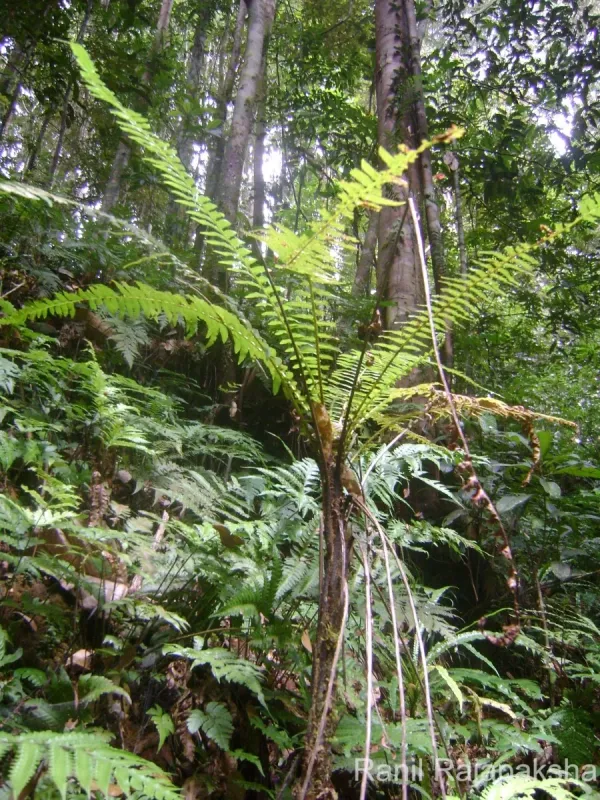
Description
Growing requirements
Cyathea hookeri is a specialized species of tree fern belonging to the Cyatheaceae family. It is endemic to the high-altitude cloud forests of Sri Lanka, which dictates its preference for specific environmental conditions in cultivation.
Botanically, it stands out for its compact growth form, which is rare for the genus. It develops a short, sturdy stem topped with a crown of intricate, frond-like leaves that add significant aesthetic value to botanical collections.
The primary requirement for success is the maintenance of high atmospheric humidity, ideally above 75%. Due to its natural habitat, it thrives in controlled environments such as climate-managed greenhouses or terrariums where moisture levels are stable.
The root system requires an airy, moisture-retentive substrate rich in organic matter. A mix of peat, bark, and perlite is often used to ensure excellent drainage while preventing the soil from ever completely drying out.
Light intensity should be low to moderate, mimicking the dappled shade of a rainforest canopy. Extreme exposure to direct sunlight will scorch the fronds and severely dehydrate the plant, often leading to irreversible damage.
Main diseases and pests
The most common pests affecting this fern include spider mites and scale insects, which often appear when the plant is stressed by low humidity levels. Biological control methods or gentle wiping of the fronds are recommended treatments.
Fungal issues, particularly stem rot, are significant risks associated with poor drainage and stagnant air. Maintaining clean growing conditions and ensuring adequate ventilation are critical for the long-term vitality of the specimen.