
Cyathea delgadii
Cyathea delgadii
Description
Growing requirements
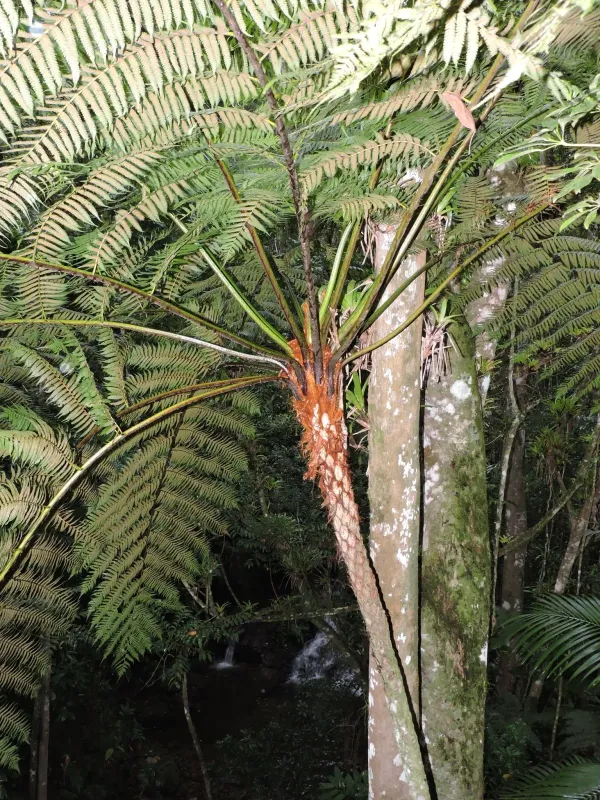
Cyathea delgadii is a notable species of tree fern belonging to the Cyatheaceae family. It is native to the tropical and subtropical regions of South America, where it thrives in moist, shaded forest understories, often found in environments with high humus content.
The plant features a distinct upright trunk, which acts as a support for its large, pinnate fronds that crown the top. These fronds are structurally robust and can reach impressive lengths, creating a canopy that is typical for arboreal ferns in the wild.
To successfully cultivate this fern, one must provide a consistently humid environment, ideally maintaining humidity levels above 70%. The plant is sensitive to desiccation, and regular irrigation of both the root system and the crown is necessary to maintain vigor.
The substrate should be porous, nutrient-rich, and slightly acidic to mimic the natural forest floor conditions. Good drainage is essential, as the roots are prone to oxygen deprivation and rot if the medium remains waterlogged for extended periods.
Commercially, Cyathea delgadii is valued primarily in the horticultural trade as an ornamental centerpiece for large conservatories, botanical gardens, and specialized indoor tropical collections where environmental control is possible.
Main diseases and pests
The most common pests affecting this fern include spider mites and mealybugs, which thrive in low-humidity environments. Integrated pest management strategies, such as physical removal and systemic treatments, are effective in controlling these infestations.
Pathogenic threats are usually related to improper aeration and excessive irrigation, leading to root and crown rot. Maintaining a sterile growing environment and ensuring proper air circulation around the foliage is critical for long-term health and disease prevention.