
Cussonia transvaalensis
Cussonia transvaalensis
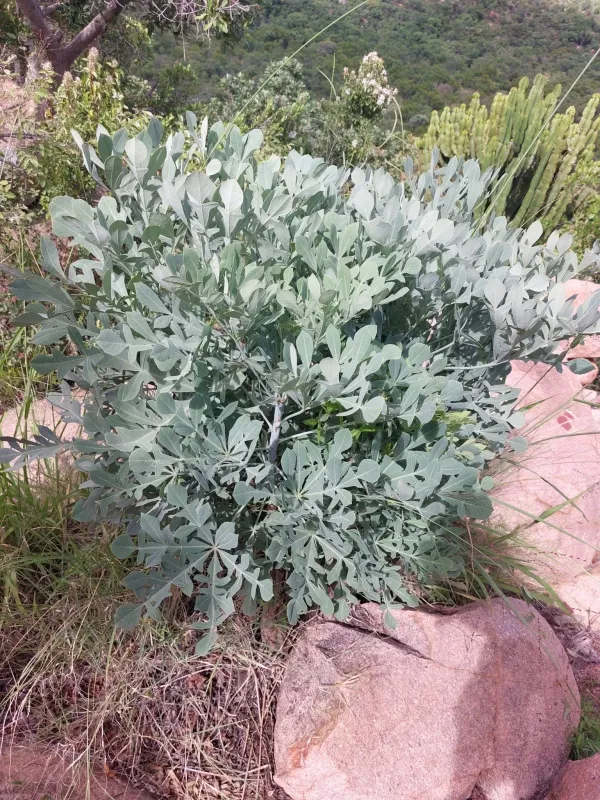
Description
Growing requirements
Cussonia transvaalensis, also known as the Transvaal cabbage tree, belongs to the Araliaceae family. It is native to the rocky landscapes and dry savannas of Southern Africa, where it has adapted to survive in challenging, low-water environments.
The plant is biologically characterized by its swollen, drought-tolerant stem, known as a caudex. This feature allows it to store water, making it a highly resilient species in its natural arid or semi-arid habitat.
For cultivation, the plant requires well-draining soil, typically a mix designed for cacti or succulents. It thrives in full sunlight, which is necessary for maintaining its compact growth habit and overall health.
Temperature requirements for growth are high, ideally ranging between 20°C and 28°C. It is not cold-hardy and must be protected from freezing temperatures, making it suitable for greenhouses or as an indoor ornamental plant in colder regions.
Maintenance involves sparse watering, especially during the winter dormant season. Overwatering is the most common mistake in its care, often leading to rapid decline or death of the root system.
Main diseases and pests
Common pests that affect Cussonia transvaalensis include spider mites and mealybugs, which tend to infest the foliage when humidity is consistently too low.
Root rot is the most significant threat to this species. It is almost exclusively caused by excessive moisture in the growing medium or a failure to provide adequate drainage holes.
Regular monitoring of the foliage and stem is essential to catch pest infestations early. Washing the leaves with mild soap solutions can help control early-stage pest issues.
Preventative care for diseases includes ensuring high-quality air circulation around the plant to prevent fungal growth on the leaves or stem surface.
If rot is detected, the plant must be removed from its pot, the affected roots pruned, and the specimen repotted in fresh, dry, fast-draining substrate to aid recovery.