
Cussonia arborea
Cussonia arborea
Description
Growing requirements
Cussonia arborea, commonly known as a type of cabbage tree, is a species within the Araliaceae family. Originating from the tropical and subtropical regions of Africa, this plant is well-adapted to the specific environmental cycles of the savannah biome.
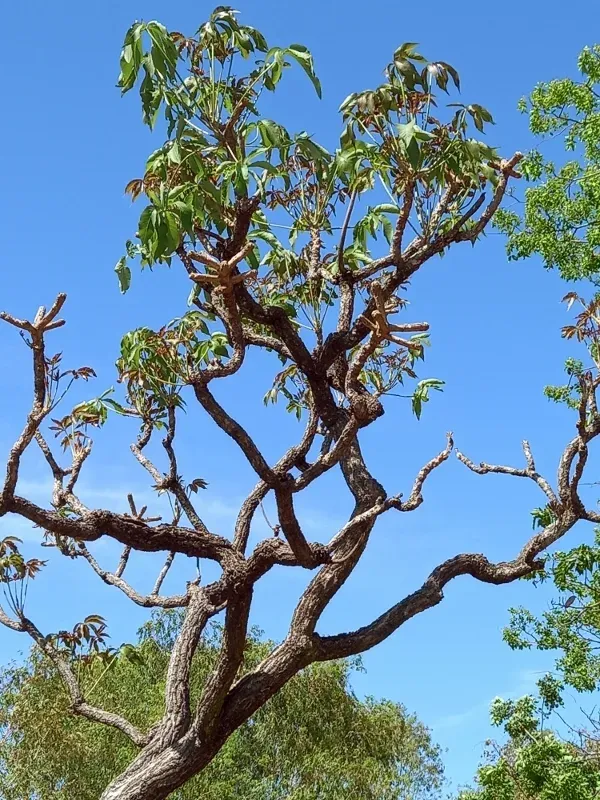
Botanically, it is recognized by its pachycaul growth habit and striking palmately compound leaves that radiate from the tips of the branches. In its natural habitat, it serves as an important ecological component, providing structure and shelter within the landscape.
Cultivation requires well-draining soil with a coarse structure to prevent water stagnation. As an exotic species, it thrives in environments that mimic its native climate, characterized by warm temperatures and high light exposure, which are essential for maintaining healthy foliage.
In managed agricultural settings, the plant is often kept in controlled environments or greenhouses in non-tropical zones. It demands consistent, albeit moderate, water application during the growing season while requiring a distinct period of rest with reduced moisture.
Agronomic practices focus on preventing root damage. Young plants benefit from periodic light pruning to encourage denser branching, while mature specimens are generally low-maintenance provided they have adequate drainage and thermal stability.
Main diseases and pests
Common pests affecting Cussonia arborea in controlled environments include spider mites and mealybugs. These pests typically congregate on the underside of leaves or at the nodes of the stems, necessitating early intervention to prevent severe infestation.
Fungal pathogens represent the most significant threat to the root system, particularly when substrate moisture is too high. Maintaining soil health and ensuring proper air circulation around the canopy are the primary strategies to mitigate these risks effectively.