
Cabbage tree
Cussonia paniculata
Description
Growing requirements
Cussonia paniculata, commonly known as the Cabbage tree, is a distinctive evergreen species belonging to the Araliaceae family. Native to the rocky slopes and grassy savannahs of South Africa, this plant is well-adapted to surviving in nutrient-poor and challenging environmental conditions.
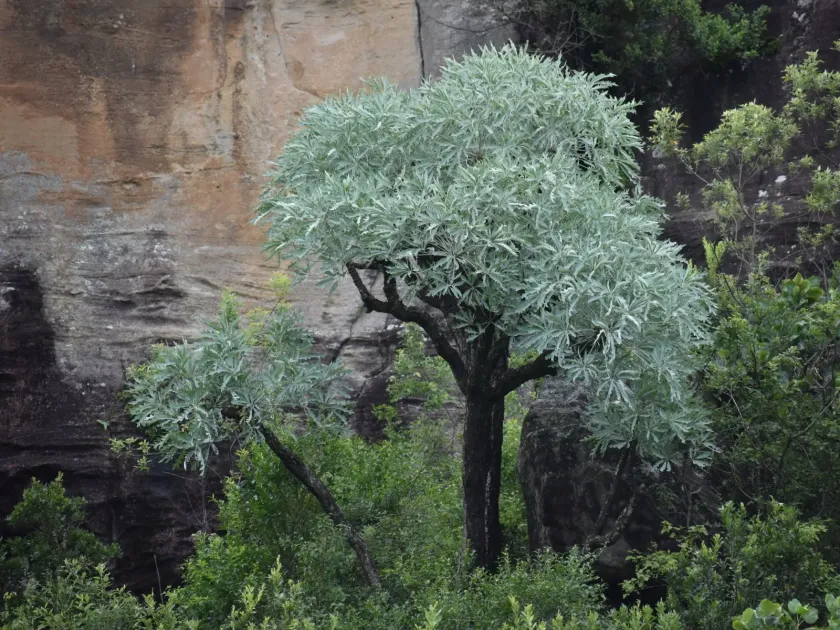
The plant is highly prized for its striking architectural appearance, featuring a stout, woody trunk and large, deeply divided, bluish-green leaves that form a cabbage-like rosette at the ends of branches. It typically grows as a small tree, adding a sculptural element to the landscape.
Cultivation requirements for this species include full sun exposure and well-draining, gritty soil. Being a plant adapted to xeriscaping, it has a high tolerance for drought once established, but it cannot survive in heavy, waterlogged soils which lead to rapid root degradation.
Climate needs are specific: it prefers warm, frost-free environments. While it can withstand light, brief dips in temperature, it is not hardy and is usually kept as an ornamental container plant in temperate regions, requiring protection in a greenhouse or bright indoor space during the colder months.
In terms of practical use, the Cabbage tree is exclusively ornamental. It is favored by landscape architects for its ability to provide a bold, exotic texture in Mediterranean-style gardens and tropical conservatory displays, where its low-maintenance nature is highly valued.
Main diseases and pests
Common pests associated with this species in indoor cultivation include spider mites and mealybugs, which thrive in stagnant air and low-humidity conditions. Regular monitoring of the leaf undersides is recommended for early intervention.
Pathological threats are primarily limited to root rot caused by fungi such as Phytophthora, which occur if the drainage is insufficient or the watering frequency is too high. Improving aeration and ensuring the potting medium dries out completely between waterings are the main preventative measures.