
Cabbage tree
Cussonia spicata
Description
Growing requirements
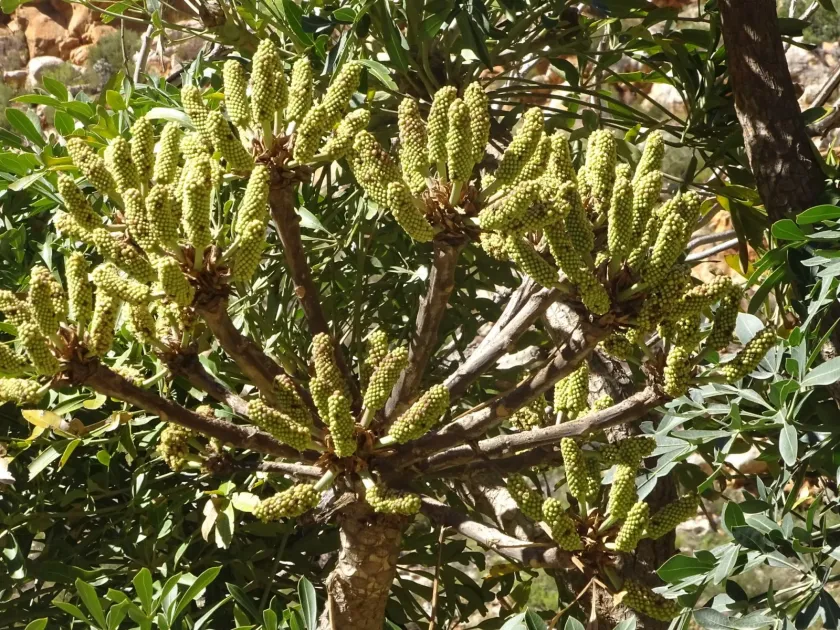
Cussonia spicata, commonly known as the cabbage tree, belongs to the Araliaceae family. It is a succulent-like evergreen tree native to South Africa, characterized by its unique architectural growth habit.
For successful cultivation, the plant requires a well-draining, nutrient-rich soil mix. It is highly intolerant to "wet feet," meaning that sandy or gritty soil substrates are essential for healthy root development.
The species thrives in full to partial sun exposure. While mature specimens are quite hardy, young plants should be protected from extreme mid-day heat to prevent leaf scorching and desiccation of the stems.
Watering frequency should be moderate, allowing the soil to dry out between waterings. During the winter dormancy period, irrigation must be strictly limited to prevent root rot in cool conditions.
The plant is highly valued for its ornamental appeal in gardens of Mediterranean or subtropical climates. It serves as an excellent focal point due to its distinctively compound leaves and large, spike-like inflorescences.
Main diseases and pests
Common pests affecting the cabbage tree include spider mites, mealybugs, and scale insects. These pests often congregate on the undersides of the leaflets or at the base of the petioles.
Root rot is the most significant disease risk, usually caused by overwatering or poor drainage. Symptoms include wilting, yellowing of foliage, and a soft, mushy stem base near the soil level.
Effective pest management involves mechanical removal of insects followed by the application of horticultural oils or systemic insecticides if the infestation is severe and persistent.
Good air circulation is vital to prevent fungal pathogens. Crowded conditions in greenhouse settings can lead to rapid spread of powdery mildew or leaf spot diseases during periods of high humidity.
Regular maintenance, including the removal of dead or decaying lower leaves, helps keep the plant healthy and reduces the risk of pest colonization in the accumulated organic matter.