
Cryptocoryne usteriana
Cryptocoryne usteriana
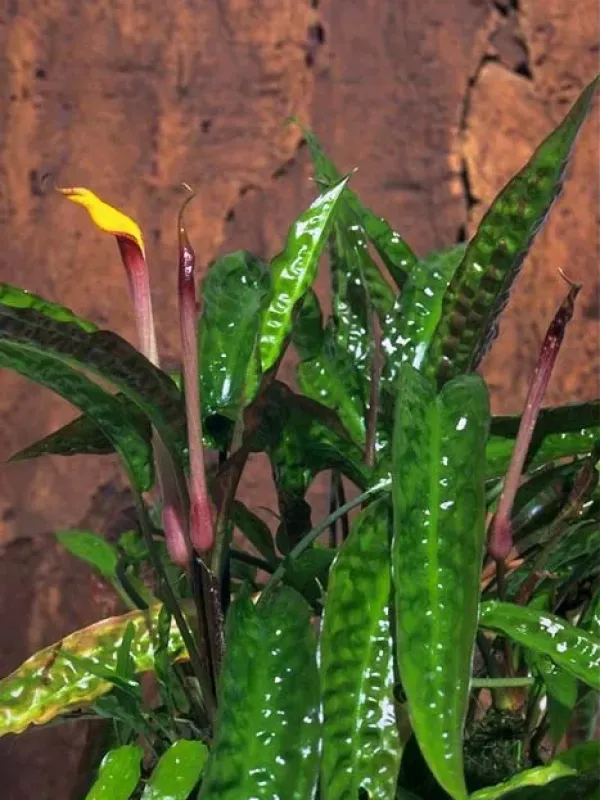
Description
Growing requirements
Cryptocoryne usteriana is a robust aquatic plant belonging to the Araceae family. Native to the Philippines, it naturally inhabits fast-flowing, clear rivers with rocky or gravelly substrates.
In cultivation, this species is noted for its preference for harder and slightly alkaline water. This sets it apart from many other Cryptocoryne species that thrive in soft, acidic environments.
Stability is the most important factor in the care of this plant. Sudden changes in water chemistry, temperature, or lighting often cause the plant to drop its leaves, a common physiological stress reaction.
The plant thrives under moderate to intense lighting, which is necessary to maintain its characteristic bullate (puckered) leaf texture and rich coloration. Low light levels lead to etiolation and slower growth rates.
A nutrient-rich substrate is essential for healthy development. The use of root tabs or clay-enriched substrate is highly recommended, as the plant relies heavily on its extensive root system for nutrient uptake.
Yield
The productivity of Cryptocoryne usteriana is measured by the formation of vegetative offsets along its creeping rhizomes. Under ideal conditions, a single healthy colony can produce several plantlets annually.
In commercial aquafarming, the plant is often grown in high-humidity greenhouses or paludariums. This method significantly increases the growth rate compared to submersed aquarium conditions.
Maintaining a water temperature between 22°C and 28°C ensures consistent growth. Professional growers utilize systematic nutrient dosing to ensure the plants maintain their deep green to brownish hue.
Harvesting involves carefully separating the daughter plants from the mother rhizome. Once the root system of the offspring is well-established, they are ready for transplanting or commercial distribution.
The species is highly valued in the aquascaping industry due to its large size and distinct appearance, making it a desirable specimen for large, open-concept aquariums.
Main diseases and pests
The primary concern for growers is the "Cryptocoryne melt," a sudden decay of leaf tissue typically triggered by drastic environmental shifts. Maintaining consistency is the best preventative measure.
Algae infestations, particularly black brush algae, can smother the broad, textured leaves. Proper water circulation and nutrient balance are essential to keep the leaves clean and allow for optimal photosynthesis.
When grown emersed, the plant is susceptible to common greenhouse pests such as aphids and spider mites. Regular inspections and the use of integrated pest management are required for large-scale operations.
Nutrient deficiencies, particularly involving iron, manifest as chlorosis on the leaf margins. If left untreated, this condition reduces the overall vigor of the plant and its market value.
Damage to the rhizome during harvesting or transport can lead to bacterial infections. Tools should be sanitized, and care should be taken to keep the plant hydrated during the handling process.