
Cryptocoryne purpurea
Cryptocoryne purpurea
Description
Growing requirements
Cryptocoryne purpurea is a perennial aquatic plant belonging to the Araceae family. This species originates from the Malay Peninsula and surrounding Indonesian islands, where it typically inhabits the banks of slow-flowing, shaded jungle streams and marshy environments.
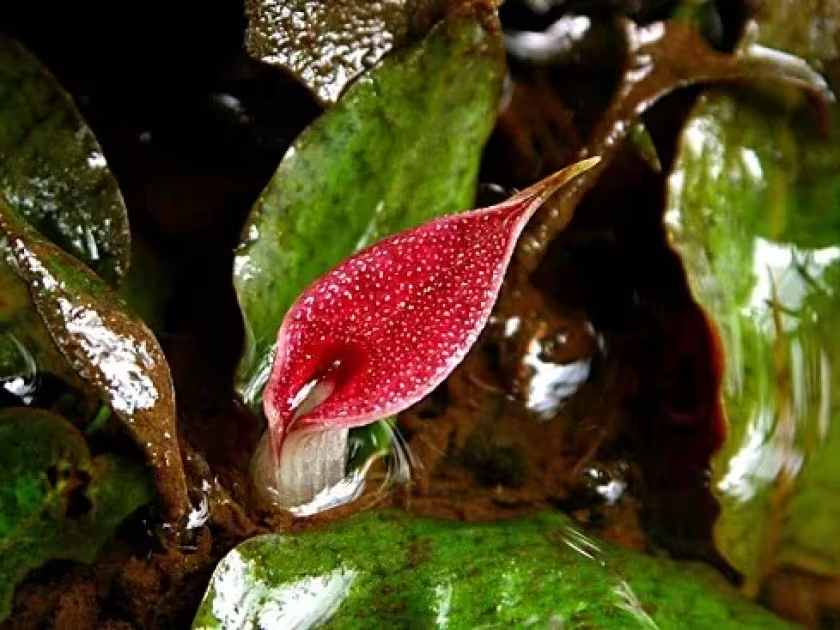
The plant is distinguished by its lanceolate leaves that feature a striking purple underside, which is its hallmark characteristic. It possesses a well-developed rhizome that allows the plant to anchor firmly in nutrient-rich substrates, essential for its growth in both submerged and emersed conditions.
To successfully cultivate this species, stable environmental conditions are required. Water temperature should be maintained between 22 and 28 degrees Celsius, while the substrate must be nutrient-dense, ideally consisting of a mixture of loam, peat, and fine aquatic gravel to support robust root development.
Lighting requirements are moderate, with a preference for diffused light. Direct, high-intensity lighting may lead to excessive algae growth on the leaves, whereas insufficient light leads to stunted growth and a loss of the deep, characteristic purple coloration of the foliage.
Water chemistry is a critical factor for the health of Cryptocoryne purpurea. The plant thrives best in soft to medium-hard water with a slightly acidic to neutral pH. It is sensitive to rapid fluctuations in water parameters, which can lead to stress responses in the plant tissue.
Main diseases and pests
The primary concern for growers is known as the "crypt melt" or "cryptocoryne disease," a sudden deterioration of leaves often triggered by sudden changes in water chemistry, light intensity, or temperature. Once the foliage begins to melt, it is essential to adjust the environmental stability to allow the rhizome to recover.
While aquatic pests are not common in fully submerged settings, the plant can be susceptible to spider mites or aphids when kept in emersed (paludarium) setups. Regular monitoring and maintaining high ambient humidity are standard practices to prevent infestation and ensure the overall vigor of the crop.