
Cotyledon papillaris
Cotyledon papillaris L. f.
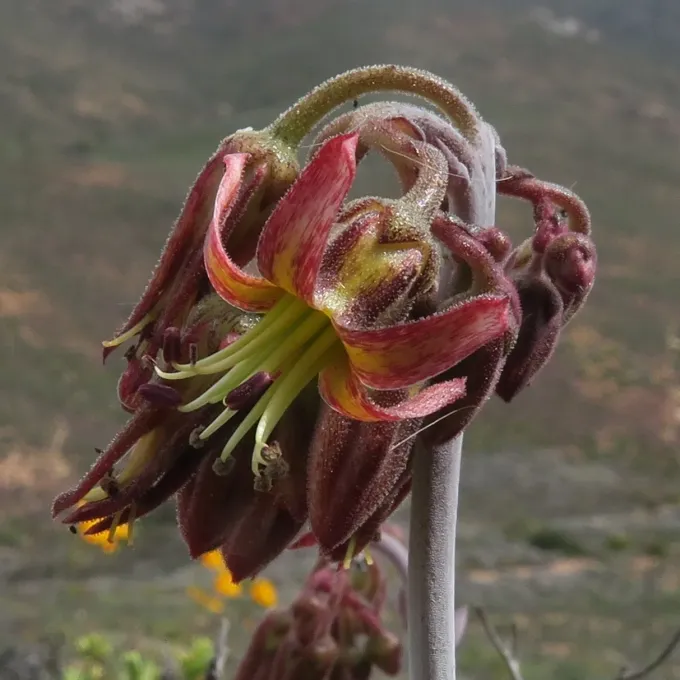
Description
Growing requirements
Cotyledon papillaris is a perennial succulent shrub belonging to the Crassulaceae family. Native to the arid regions of Southern Africa, it has evolved to thrive in rocky, well-draining environments where water availability is periodic and scarce.
The cultivation of this species requires full sun exposure to maintain its dense structure and the accumulation of sap within its fleshy, papillose leaves. In indoor settings, high-intensity light is mandatory to prevent etiolation and maintain proper physiological balance.
The substrate must be highly permeable, mimicking the natural mineral-rich, porous soils of its native habitat. A mixture composed of coarse sand, perlite, and a small fraction of organic matter ensures adequate aeration and prevents root asphyxiation.
Watering intervals should be strictly tied to the moisture level of the substrate. It is essential to allow the medium to dry out completely between irrigations, as this species is highly susceptible to root decay when exposed to persistent dampness.
Temperature management involves maintaining warm conditions during the active growth phase, followed by a cool dormant period during winter months. This thermal cycle mimics natural conditions and is crucial for the development of healthy leaf tissue.
Main diseases and pests
The most significant threat to Cotyledon papillaris is mealybug infestation, which primarily targets the axils of the leaves. Systematic monitoring and the use of insecticidal soap or specialized systemic agents are effective methods for controlling these populations.
Root rot is the most common pathogen-related issue, usually triggered by improper watering schedules or poor soil drainage. If symptoms appear, the plant must be removed from the pot, cleaned, and repotted in fresh, dry, porous soil.
Fungal leaf spots can occur when humidity levels are excessively high, particularly when ventilation is inadequate. Improving airflow and reducing ambient moisture are the primary strategies to mitigate these conditions and restore plant health.
Aphid colonies may occasionally target new succulent growth, extracting cell sap and causing structural damage. Early intervention using horticultural oils or mild insecticides is generally sufficient to resolve the threat to the plant's development.
Maintaining a clean growing environment is vital for long-term health. Periodically removing dried lower leaves and maintaining a dry surface around the base of the plant minimizes the potential for opportunistic pests and pathogens to thrive.