
Cotyledon eliseae x orbiculata
Cotyledon eliseae van Jaarsv. x Cotyledon orbiculata L.
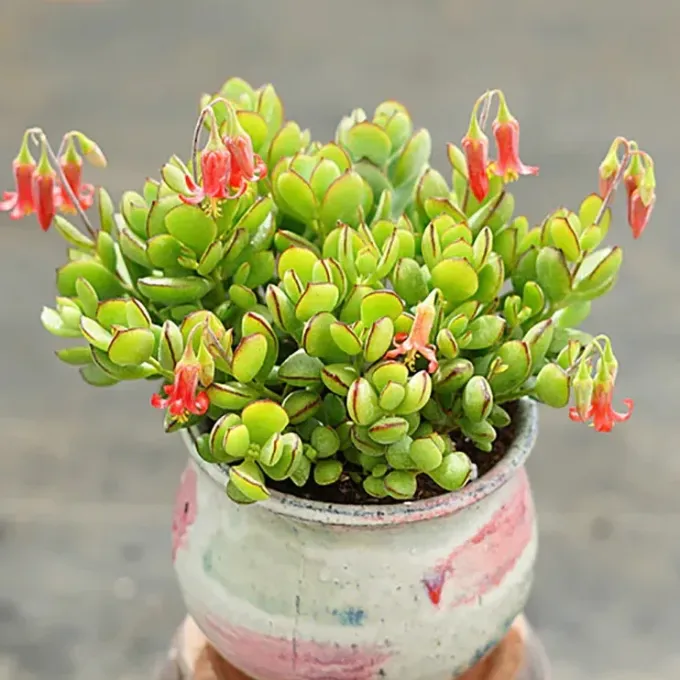
Description
Growing requirements
This hybrid, belonging to the Crassulaceae family, is a drought-tolerant succulent known for its structural beauty and thick, waxy foliage. As a cross between Cotyledon eliseae and Cotyledon orbiculata, it thrives under conditions mimicking its native South African habitat.
Optimal growth requires a highly porous and well-draining substrate. Gardeners should utilize a mix consisting of professional succulent potting soil blended with perlite, pumice, or coarse sand to prevent moisture accumulation around the delicate root system.
Light intensity is the most critical factor for this plant. It requires bright, direct sunlight for several hours a day to maintain its compact growth habit and vibrant leaf coloration. Insufficient light will quickly result in stretching, a condition known as etiolation.
Watering practices must be disciplined. The plant should be watered deeply until water runs out of the drainage hole, followed by a complete drying period of the soil throughout the container before the next irrigation cycle occurs.
During the dormant winter phase, temperatures should be kept cooler, preferably between 10 and 15 degrees Celsius. This reduced temperature range, combined with minimal watering, is essential to induce flowering and ensure long-term plant health.
Main diseases and pests
Root rot is the most common threat to this culture, almost exclusively caused by overwatering or poor drainage. Infected plants typically display yellowing leaves and a softening of the stem, which may be irreversible if the root system has collapsed.
Mealybugs are the primary pest concern for this species, often congregating in leaf axils where they are difficult to detect. Regular inspection and the application of systemic insecticides or isopropyl alcohol are recommended control methods.
Scale insects can occasionally infest the stems, creating small, hard brown bumps. Manual removal using a soft brush dipped in horticultural oil is effective for small-scale infestations, while systemic treatments are needed for larger outbreaks.
Fungal infections, such as powdery mildew, can occur if the humidity is too high and air circulation is insufficient. Ensuring good airflow around the plants helps to mitigate the risk of these airborne pathogens.
Sunburn can occur when a plant is moved abruptly from low-light conditions to direct, intense sun. Always introduce the plant to increased light levels gradually over the course of several weeks to allow the epidermis to harden.