
Cotyledon campanulata hybrid
Cotyledon campanulata Marloth x C. pendens van Jaarsv.
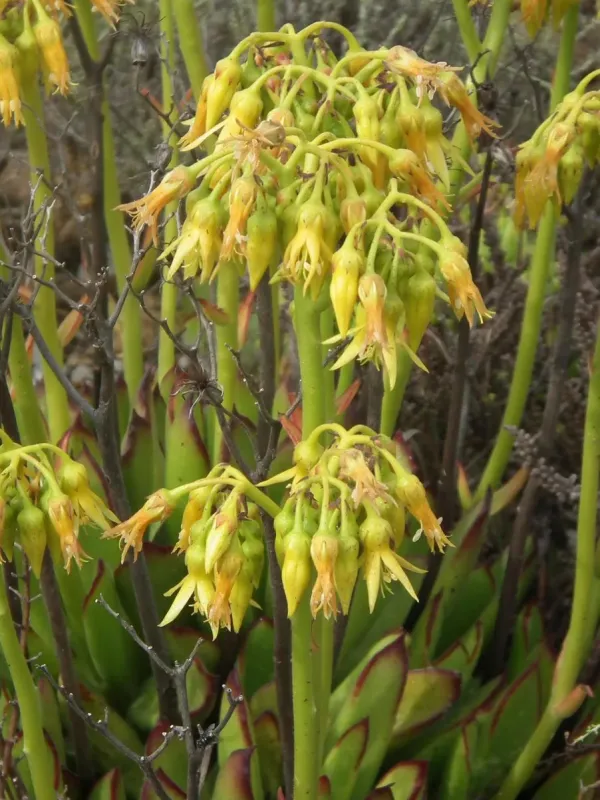
Description
Growing requirements
The Cotyledon campanulata hybrid is a unique succulent belonging to the Crassulaceae family. This hybrid combines the distinct bell-shaped floral features of its parent species with improved resilience for container cultivation.
Cultivation requires a highly porous potting medium. A blend of succulent soil mixed with inorganic components like pumice or perlite is essential to ensure rapid drainage and prevent the roots from remaining damp.
Environmental requirements include bright light exposure. While it thrives in full sun during the morning hours, it is advisable to protect the leaves from harsh midday scorching during peak summer months.
Temperature management is critical for the plant's health. It thrives in ambient temperatures between 20°C and 25°C, but it requires a cooler period during winter, ideally between 10°C and 15°C, to remain dormant.
Watering strategies must be strict and follow a soak-and-dry method. During the active growing season, water thoroughly only when the substrate has completely dried out to avoid the risk of physiological collapse.
Main diseases and pests
Mealybugs are the most common pests affecting this hybrid. These insects cluster in the leaf axils and feed on the plant's sap, which can significantly weaken the overall vitality of the succulent over time.
Root rot is the primary threat caused by improper watering techniques. When the roots are submerged in wet soil for prolonged periods, anaerobic bacteria thrive, leading to the rapid decay of the vascular system.
Fungal pathogens such as Botrytis may occur in environments with high humidity and poor air circulation. Symptoms include soft, mushy leaf tissue or the appearance of grey mold on the plant surface.
Prevention relies heavily on maintaining a clean growing area and ensuring that potting containers have adequate drainage holes. Avoiding overhead watering reduces the likelihood of leaf rot and fungal spores spreading.
Regular monitoring of the root zone and stems is recommended. If signs of infestation appear, immediate isolation of the plant is necessary to prevent the pests from spreading to other specimens in the collection.