
Bear's Paw
Cotyledon tomentosa Harv.
Description
Growing requirements
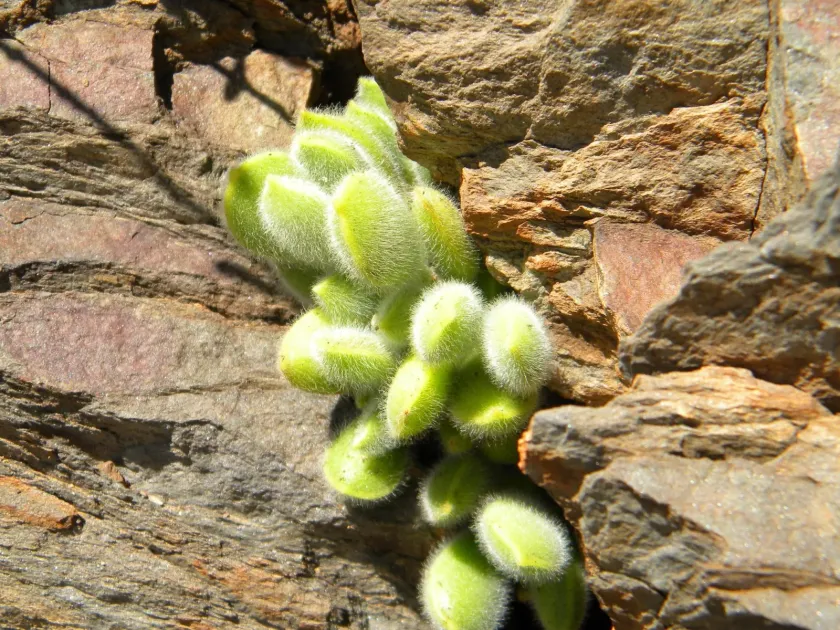
Cotyledon tomentosa, commonly known as Bear's Paw, belongs to the Crassulaceae family. This succulent is native to the arid regions of South Africa, where it has evolved to thrive in rocky environments with limited water availability.
The plant is characterized by its fuzzy, fleshy leaves that resemble miniature paws, often tipped with small reddish teeth. It typically grows as a compact shrub, making it a highly desirable specimen for collectors and indoor garden enthusiasts.
Cultivation requires bright, indirect sunlight to maintain its compact growth habit. Exposure to direct intense sun, especially during mid-day, can sometimes scorch the delicate fuzzy foliage, so proper placement is essential for plant health.
Soil requirements are strict regarding drainage. A gritty, well-draining succulent mix is mandatory to prevent moisture accumulation around the base of the plant, which is the primary cause of physiological distress.
Temperature management involves keeping the plant within a range of 20–25 °C during the growing season. A cooler winter dormancy period, around 12–15 °C, is necessary to promote healthy blooming and to mimic the plant's natural environmental cycles.
Main diseases and pests
The most significant threat to Cotyledon tomentosa is overwatering, which quickly leads to root rot and stem decay. Once the root system is compromised by anaerobic conditions, the plant's recovery is difficult to achieve.
Mealybugs are the primary pest threat for this species. Their presence can be hidden within the dense hairs of the leaves, making early detection and intervention crucial for maintaining the plant's vitality.
Spider mites are another common issue, especially in environments with low humidity. These pests feed on the cellular sap, resulting in discolored patches on the foliage and a general decline in the plant's aesthetic appeal.
To combat pests, systemic insecticides or gentle application of horticultural soaps are recommended. Care must be taken not to damage the trichomes (leaf hairs) while applying treatments to ensure the plant retains its texture.
Effective pest management is best supported by proper hygiene, including the removal of dead leaves and ensuring adequate airflow around the plant. Avoiding water accumulation in the crown of the plant is vital to prevent fungal infections.