
Cotyledon orbiculata
Cotyledon orbiculata L.
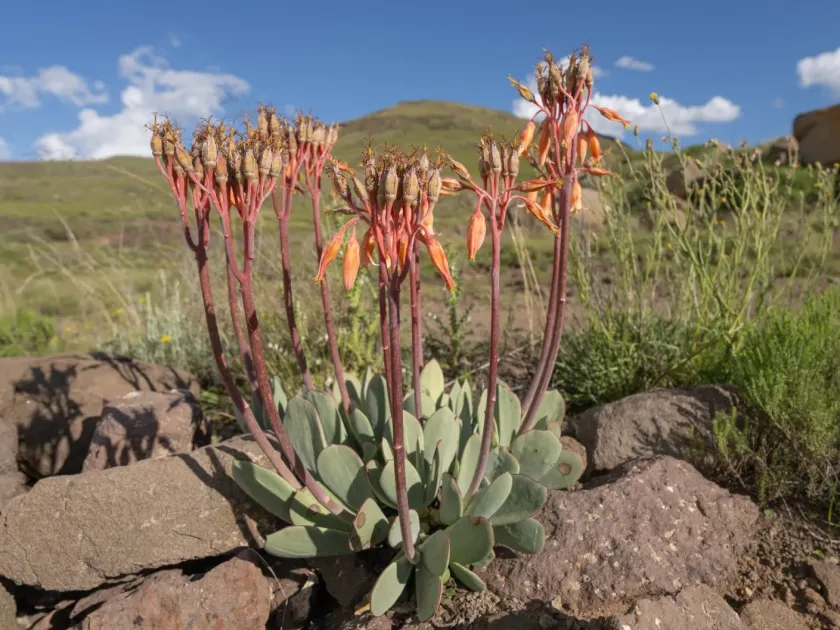
Description
Growing requirements
Cotyledon orbiculata is a succulent perennial plant belonging to the Crassulaceae family. It is native to South Africa, where it thrives in arid environments characterized by hot days and cool nights.
The plant is known for its thick, paddle-shaped leaves covered in a white, powdery bloom that acts as a natural sunscreen. The shrub-like growth habit allows it to reach significant heights under optimal outdoor conditions.
For successful cultivation, the plant requires bright, direct sunlight for at least six hours a day. It is highly heat-tolerant but needs a well-draining soil mix specifically formulated for succulents to prevent moisture accumulation.
During the growing season, watering should be performed only when the substrate is completely dry. In winter, the plant enters a semi-dormant phase and requires minimal moisture to survive without excessive growth.
This species is predominantly used as a decorative ornamental plant in xeriscaping or as a container plant. It is appreciated by gardeners for its unique geometric appearance and low maintenance requirements.
Main diseases and pests
The primary threat to the health of this succulent is overwatering, which leads to root rot. If the soil remains soggy for extended periods, the plant’s root system will quickly decompose and perish.
Mealybugs are the most common pests that infest Cotyledon orbiculata. They tend to gather in the protected areas between the leaves, requiring targeted treatment with neem oil or systemic insecticides.
Lack of proper light levels often results in stretching, known as etiolation. This makes the plant structurally weak and susceptible to secondary infections or mechanical damage.
Fungal leaf spot diseases may appear if there is poor air circulation combined with high humidity. Proper spacing and airflow are critical for maintaining healthy, clean foliage on mature plants.
To ensure long-term health, monitor the plant for any discoloration of the stems or leaves. Early intervention through repotting or localized treatment can prevent minor infestations from spreading to other specimens.