
Corylopsis yunnanensis
Corylopsis yunnanensis
Description
Growing requirements
Corylopsis yunnanensis is a deciduous shrub belonging to the Hamamelidaceae family. Originating from the mountainous forests of the Yunnan province in China, it is prized for its elegant form and early spring flowering habit.
The plant thrives in semi-shaded locations with protection from strong, drying winds. It is essential to choose a spot where the plant can receive dappled light, as intense direct sunshine may scorch the delicate foliage during the summer months.
Regarding soil requirements, this species prefers acidic to neutral, humus-rich, and well-draining soil. It does not tolerate waterlogged conditions or heavy clay soils, which can lead to root suffocation and decay over time.
Cultivation requires consistent moisture levels, especially during the establishment phase. Applying a layer of organic mulch, such as leaf mold or bark, is highly recommended to regulate soil temperature and retain essential moisture levels.
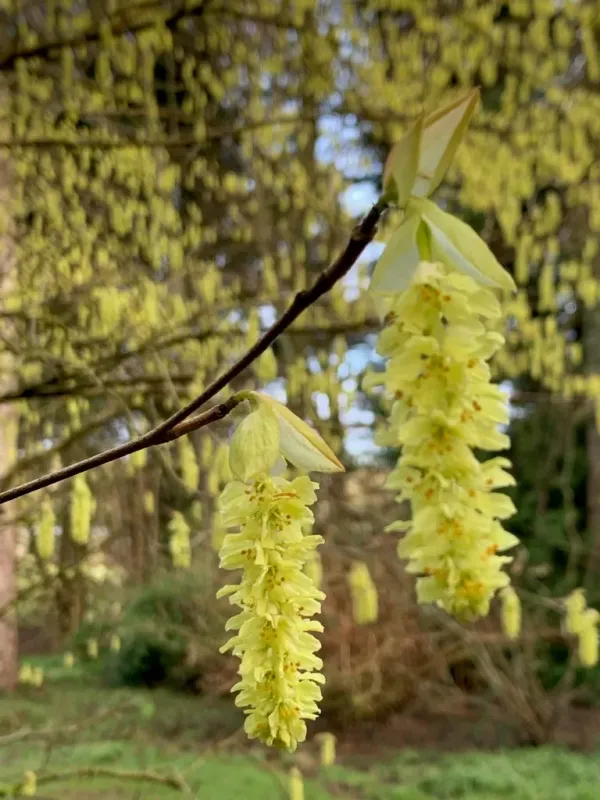
The shrub is often used in landscape design to create vertical interest and provide early color in the garden. Its yellow, fragrant racemes emerge before the leaves, making it a valuable addition to woodland settings or shrub borders.
Main diseases and pests
The primary concern for this plant is powdery mildew, which can occur during periods of high humidity and poor ventilation. Providing sufficient space between plants helps significantly reduce the incidence of fungal issues.
Aphids are the most common insect pests that infest the tender new growth in spring. If left untreated, they can cause leaf curling and reduce the overall vigor of the shrub; application of insecticidal soaps is usually effective.
Root rot is a significant threat associated with improper drainage or over-irrigation. Ensuring a porous substrate and preventing water accumulation in the planting pit are critical management practices to maintain plant health.
Iron chlorosis may appear if the soil pH becomes too alkaline. This physiological disorder requires the application of chelated iron or the incorporation of peat moss into the soil to restore the optimal nutrient uptake balance.
Frost damage to emerging flower buds is a climate-related risk for this early-blooming shrub. In regions prone to volatile spring weather, placing the plant near a wall or in a sheltered spot can help mitigate temperature drops.