
Himalayan witch hazel
Corylopsis himalayana
Description
Growing requirements
Himalayan witch hazel (Corylopsis himalayana) is a distinguished deciduous shrub belonging to the Hamamelidaceae family. Originating from the Himalayan mountain ranges, this plant thrives in temperate forest settings where it is protected from harsh weather elements.
To successfully cultivate this species, gardeners must provide well-drained, acidic to neutral soil that is rich in organic matter. Proper soil structure is essential, as the root system is highly sensitive to waterlogging, necessitating the incorporation of gravel or sand in heavy soil types.
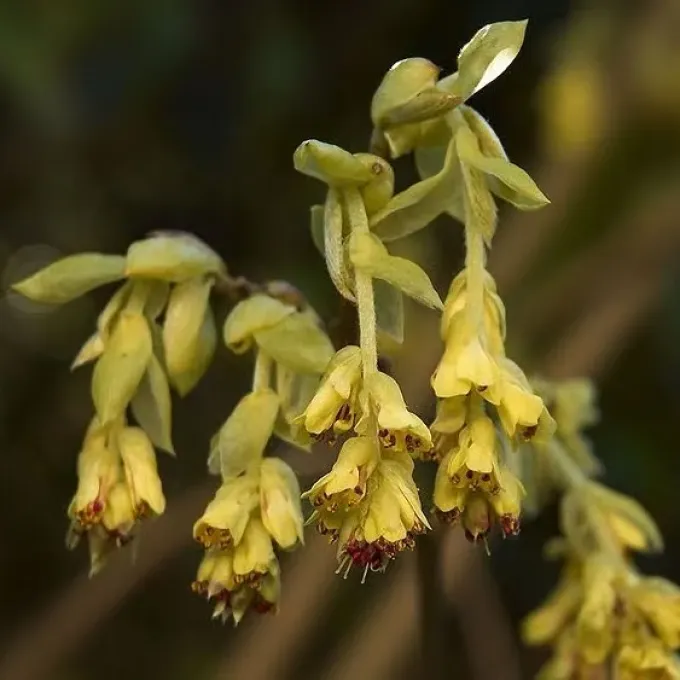
Botanically, the plant is prized for its early spring blooms, which appear on bare, arching branches in elegant, pendulous racemes. Its growth habit is broad and spreading, requiring adequate spacing from other landscape elements to fully exhibit its graceful structure.
The climatic needs include a site with partial shade, shielding the foliage from the intense afternoon sun during summer months. While reasonably hardy, young specimens benefit from shelter against freezing winds and excessive frost, especially in the first few years of establishment.
Agricultural management centers on consistent moisture retention through mulching with organic material such as pine needles or compost. Pruning should be handled meticulously after the flowering period to encourage branching and maintain the desired aesthetic shape of the shrub.
Main diseases and pests
Like many members of its family, Himalayan witch hazel is susceptible to various fungal pathogens that flourish in damp, stagnant environments. Leaf spot and root rot are the primary concerns, which can be mitigated by ensuring proper air circulation and drainage.
Common insect pests include spider mites and aphids, which are particularly active during hot and dry spells. Integrated pest management strategies, including the use of neem oil or insecticidal soaps, are generally effective in managing these infestations when detected early.