
Willmott's witch hazel
Corylopsis willmottiae
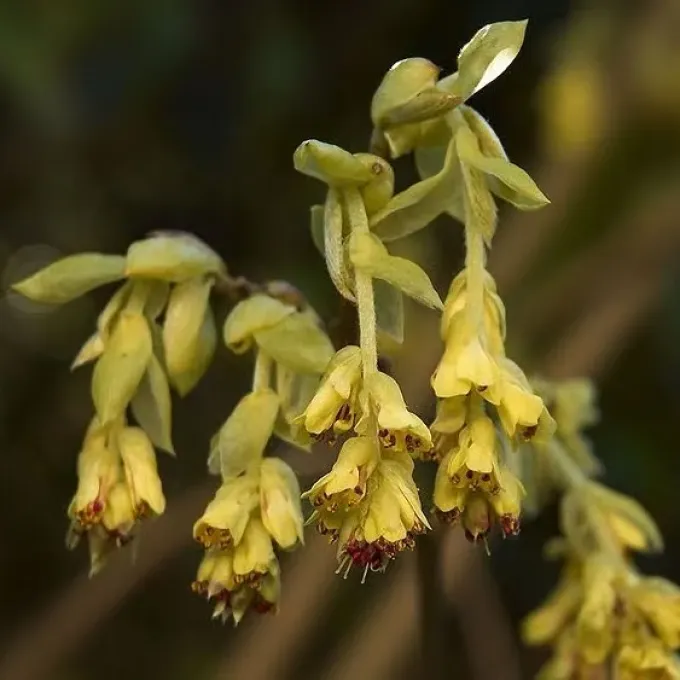
Description
Growing requirements
Corylopsis willmottiae, commonly known as Willmott's witch hazel, belongs to the Hamamelidaceae family. This deciduous shrub is native to the mountain regions of China, where it thrives in humid and temperate forest environments.
The plant requires a sheltered position in the garden, protected from harsh, drying winds. It performs best in partial shade, as intense direct sunlight can scorch the foliage and dry out the soil too quickly during the summer months.
Regarding soil, it prefers deep, fertile, and slightly acidic conditions. Excellent drainage is critical, as this species is highly susceptible to root rot if waterlogged, especially during the dormant winter period.
Consistent moisture is necessary throughout the growing season. Applying a thick layer of organic mulch around the base of the plant helps retain soil moisture, suppress weeds, and regulate soil temperature, mimicking its natural forest habitat.
Maintenance involves light pruning immediately after flowering to maintain a graceful, open structure. It is generally hardy, but in colder climates, it may benefit from winter protection to save the earliest flower buds from late spring frosts.
Main diseases and pests
The most common health issues for this shrub are fungal infections associated with poor air circulation or overwatering. Maintaining a proper distance from other plants and pruning for airflow are essential preventative measures.
Insect pests such as aphids and spider mites can occasionally affect new growth. Monitoring the underside of leaves regularly allows for early detection and manual intervention or the use of appropriate horticultural oils and soaps.
Iron chlorosis is frequently observed when the plant is grown in neutral or alkaline soil. Regular soil testing and the addition of chelated iron or sulfur amendments can correct this nutrient deficiency and restore healthy leaf color.
Root rot is the most serious threat, often caused by heavy soil that lacks sufficient aeration. If the plant shows signs of wilting despite regular watering, the soil drainage should be investigated and improved immediately.
General hygiene in the garden, including the removal of dead or decaying branches, helps reduce the fungal spore load. Following these practices ensures the long-term vitality of the shrub in a landscape setting.