
Moorcroft's Corydalis
Corydalis moorcroftiana Wall. ex Hook. f. & Thomson
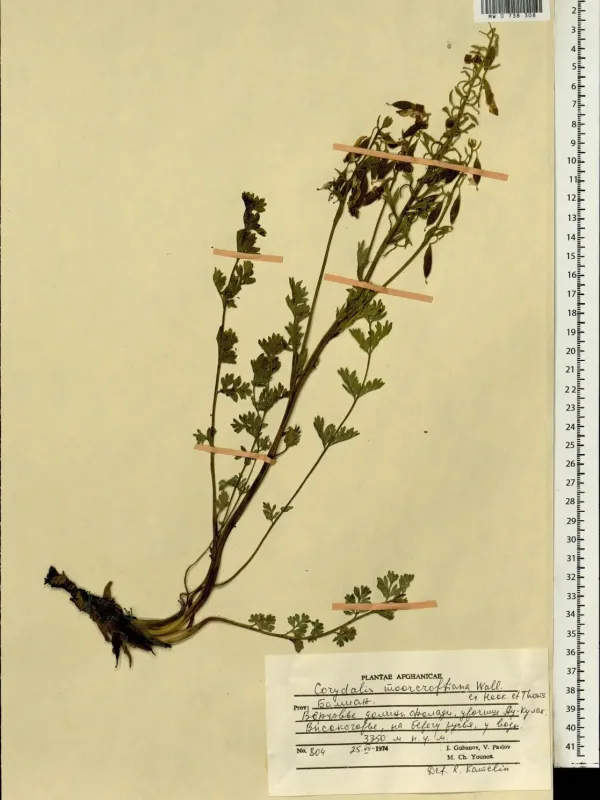
Description
Growing requirements
Moorcroft's Corydalis (Corydalis moorcroftiana) is a perennial herbaceous plant belonging to the Poppy family (Papaveraceae). It is native to the high-altitude regions of Central Asia and the Himalayas, thriving in rugged alpine terrains.
The cultivation of this plant requires conditions that mimic its native high-mountain habitat. It prefers well-drained, stony or sandy soils and demands excellent aeration to prevent the roots from decaying.
Climate requirements include a preference for cool temperatures and significant light exposure. It struggles in hot, humid climates, which makes regional selection for cultivation crucial for successful biomass production.
Botanically, the plant features a rhizome that stores nutrients, allowing it to survive harsh winter conditions. The leaves are typically dissected, forming a basal rosette from which the inflorescence emerges during the growing season.
The primary agricultural interest in this species lies in its medicinal properties. Certain alkaloids found within the plant tissues are being studied for their potential therapeutic applications in modern medicine.
Main diseases and pests
Fungal pathogens affecting the root system represent the most significant threat to this crop. Over-irrigation or poor soil structure leads to root rot, which is often fatal to the plant during its vegetative stage.
Aphids are the most common pests that pose a threat to the plant's health. They typically target the inflorescences, causing stunted growth and reducing the potential quality of the raw material.
Weed infestation is a primary concern during the establishment phase of the crop. Because the growth of Corydalis moorcroftiana is relatively slow, proactive weeding is essential to reduce competition for nutrients.
Environmental stress, particularly erratic temperature fluctuations during the dormant phase, can damage the crown of the plant. Applying light mulching materials can help insulate the rhizomes from rapid temperature shifts.
Rodents can cause localized damage to the rhizomes during the dormant season. Implementing exclusion techniques or integrated pest management strategies is recommended to ensure the longevity of the plant population.