
Fumewort
Corydalis solida (L.) Clairv.
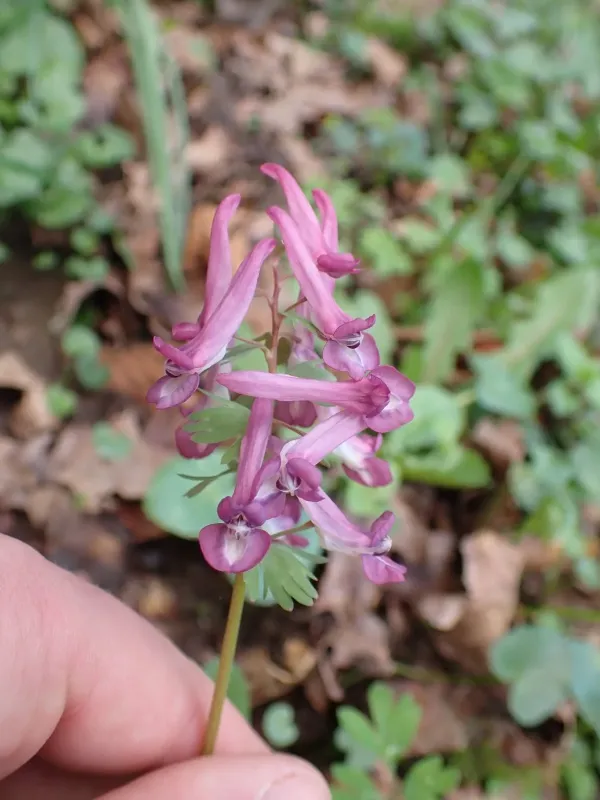
Description
Sowing dates
Propagation of Corydalis solida can be achieved by sowing fresh seeds or by dividing the tubers. Seeds must be sown immediately after collection, as they lose viability very quickly if allowed to dry out.
When sowing seeds, it is necessary to subject them to a period of cold stratification. In temperate regions, outdoor sowing in late spring or autumn usually yields successful germination the following spring.
The most reliable way to increase stocks is through the division of tubers. This should be performed during the dormant period, once the foliage has completely turned yellow and died back, typically in June.
Tubers should be planted at a depth of approximately 8-10 centimeters in loose, nutrient-rich soil. Proper spacing is essential to ensure that individual plants have enough room to develop their root systems for the next year.
While the tubers are dormant, the site should be marked to avoid accidental disturbance or injury to the plants while gardening during the summer months.
Growing requirements
Fumewort (Corydalis solida) is a perennial herb belonging to the Papaveraceae family. It is a classic spring ephemeral, characterized by a rapid growth cycle that allows it to bloom and complete its life cycle before the forest canopy closes.
Native to forests across Europe and Asia, it thrives in rich, humus-laden soil that mimics the environment of the woodland floor. The plant relies on the early spring moisture to support its vibrant, tubular flowers.
Ideal conditions for cultivation include partially shaded areas with well-draining soil. This plant is perfectly suited for rock gardens, underplanting beneath deciduous trees, or naturalized in semi-shaded borders.
The soil should have a neutral to slightly acidic pH. Because the plant produces fleshy tubers, it possesses an efficient storage system that allows it to survive periods of dormancy once the foliage withers in early summer.
Fumewort is extremely hardy and resilient to cold climates. It does not require winter protection, as the tubers remain safely insulated beneath the soil surface, ready to sprout when temperatures rise in spring.
Main diseases and pests
Fumewort is generally disease-resistant, but it can suffer from tuber rot if grown in heavy, waterlogged soil. Ensuring excellent drainage is the most effective preventative measure against fungal pathogens.
Slugs and snails are the primary pests that damage the young, tender foliage. In damp springs, protective barriers or organic bait can be used to mitigate damage to the emerging sprouts.
Rodents, particularly voles and mice, may occasionally feed on the tubers during the winter months. Protecting the planting area with wire mesh can prevent significant losses in woodland-edge gardens.
In cases of overcrowding, plants may become stressed and more susceptible to foliage diseases. Proper spacing allows for adequate air circulation, which helps keep the leaves dry and healthy.
If any plants exhibit signs of viral mosaic or severe stunted growth, they should be carefully lifted and disposed of to prevent the spread of the virus to healthy parts of the garden.