
Spreading Correa
Correa decumbens F. Muell.
Description
Growing requirements
Spreading Correa (Correa decumbens) is a prostrate, evergreen shrub belonging to the family Rutaceae. It is native to South Australia, where it has evolved as a hardy ground-cover plant capable of thriving in various temperate soil conditions.
The plant features small, leathery, dark green leaves that are densely arranged along spreading branches. This growth habit makes it an excellent choice for stabilizing soil on gentle slopes or filling gaps in rock gardens, providing a year-round green canopy.
Cultivation requires well-drained, slightly acidic soil. In containers or heavy soil environments, adding coarse sand or gravel is essential to facilitate water movement and prevent root rot, which is a common challenge for this specific species.
The species performs best in semi-shaded areas, particularly in hotter climates where direct midday sun might scorch the foliage. It can tolerate moderate frost but generally prefers sheltered microclimates to maintain its lush appearance during the dormant season.
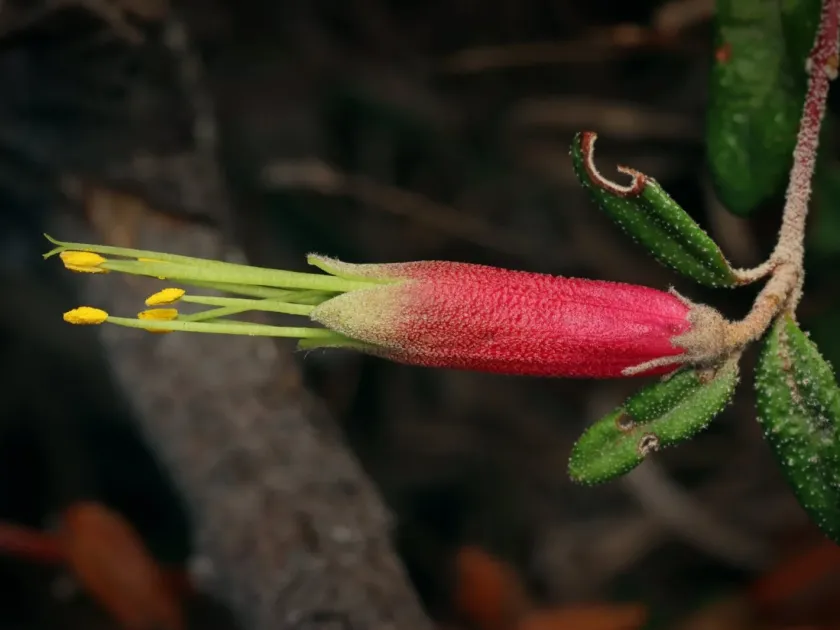
In landscape architecture, the Spreading Correa is highly valued for its unique bell-shaped flowers that bloom over an extended period. These flowers are not only aesthetically pleasing but are also a significant source of nectar for local bird populations.
Main diseases and pests
The primary threat to the health of Spreading Correa is Phytophthora root rot, triggered by poor drainage and waterlogged conditions. Ensuring a high-quality soil structure and avoiding overhead watering in cool, humid conditions is critical for plant longevity.
Pests such as scale insects and aphids may occasionally infest new growth during the spring season. A simple solution is to prune away the affected branches or use horticultural oils to manage the population without damaging the beneficial insects in the garden.