
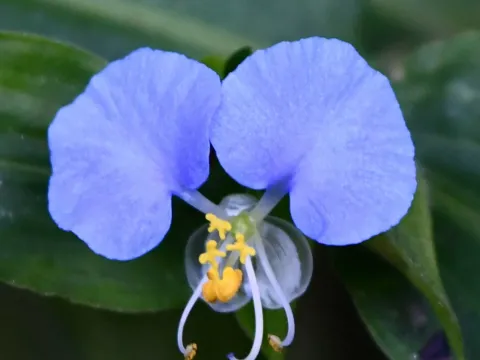
Commelina
Commelina
Sowing of Commelina communis for agricultural purposes is typically planned for the spring season, once the soil has warmed up to 12–15 degrees Celsius. The optimal time for direct seeding in open fields is late April or early May, depending on the regional climate.
What the section contains


Commelina
For early production of green biomass, transplanting is possible by starting seeds in a controlled environment during March. Seedlings are then transplanted to the field once the risk of late spring frost has completely passed, which is crucial for these heat-loving plants.
The planting depth for seeds should not exceed 1–2 centimeters, as Commelina seeds are small and have low germination energy if buried too deep. The recommended planting scheme is 30 by 40 centimeters to ensure adequate space for each plant to thrive.
The culture exhibits a high capacity for self-seeding, so when growing it as a fodder crop, farmers must manage this biological trait. Agronomists suggest monitoring planting density to prevent the crop from spreading uncontrollably across the farm fields.
When cultivating on a large scale, the use of precision seed drills is highly recommended to ensure uniform seed distribution, which subsequently facilitates easier field maintenance, including weed management during the plant's early growth stages.
Commelina belongs to the Commelinaceae family and is a typical moisture-loving plant that prefers well-hydrated soils. It grows best in loamy and fertile soils, rich in organic matter, with a neutral or slightly acidic pH level.
The plant has high demands for sunlight; however, in regions with very hot summers, it can tolerate light shading, which allows for successful cultivation between the rows of other crops. The temperature optimum for vegetative growth is 20–25 degrees Celsius.
The most critical factor for achieving high biomass is regular watering, especially during the active stem growth phase. If moisture is deficient, Commelina slows its development, and the quality of the green mass decreases significantly, becoming coarser.
Agricultural soil management includes regular inter-row cultivation to prevent soil crusting, which negatively impacts root system development. Nitrogen fertilization promotes the vegetative growth necessary for harvesting the plant as animal fodder.
The crop is relatively resistant to short-term waterlogging, but standing water in lowlands can lead to crown rot. Therefore, in areas with high groundwater levels, the installation of proper drainage systems is highly recommended.
The economic value of Commelina lies in its high nutritional quality as green fodder for livestock. When agronomic standards are met, the yield of green biomass can reach significant levels within a single growing season.
The main indicator of cultivation efficiency is the output of dry matter per hectare. Due to its ability to regrow quickly after harvesting, Commelina allows for 2–3 cuts per growing season, depending on the intensity of care and environmental conditions.
Maximum productivity is observed during the flowering phase, when the plant accumulates the highest amount of proteins, vitamins, and minerals. To achieve the maximum yield of nutritional units, it is essential to harvest before the stems become over-mature and fibrous.
In regions with long, warm growing seasons, the yield increases significantly because the plant can complete multiple full development cycles. Experienced farmers use combined feeding methods to maintain stable productivity throughout the entire season.
Data regarding exact yields per hectare vary by region; however, the plant's adaptability to local conditions makes it a promising object for cultivation on smallholdings and commercial farms alike.
Commelina possesses natural immunity to many diseases common to grain or vegetable crops, making it a relatively low-maintenance plant to grow. Nevertheless, in high humidity conditions, fungal infections can occasionally occur.
The most common threat is powdery mildew, which appears as a white coating on the leaves. Prevention includes maintaining optimal planting density and ensuring regular air circulation in the fields where the crop is cultivated.
Among pests, slugs and snails pose the greatest danger to young shoots and can completely destroy seedlings early in the season. Installing traps or using physical barrier protection methods around the planting beds is recommended.
In some cases, aphid infestations are observed, which suck sap from young leaves and lower the plant's overall vitality. If pest hotspots are detected, the application of biological insecticides that are safe for fodder crops is advised.
Monitoring the general condition of the crops is vital, as weakened plants become more susceptible to pest damage. Timely weeding also reduces the risk of inviting insect herbivores into the crop area.
Harvesting Commelina for green fodder is carried out by mowing the aerial part of the plant. The optimal time for harvesting is the beginning of the flowering stage, when the nutrient content in the leaves and stems is at its peak for livestock nutrition.
It is recommended to mow during morning hours after the dew has evaporated to ensure the highest quality of green mass. Using professional mowers allows for the efficient processing of significant areas.
For winter storage, the mowed mass must be dried quickly to prevent self-heating and vitamin loss. The use of active ventilation during the drying process helps preserve the green color of the fodder and its high biological value.
Ensiling Commelina is also possible by mixing it with other fodder crops. This helps enrich the silage mass with beneficial micronutrients and improves its palatability for livestock, promoting better feed intake.
After harvesting, the Commelina root system often remains viable, allowing the crop to regenerate quickly and produce a secondary growth (oatmeal/regrowth) if enough time and moisture remain in the growing season.