
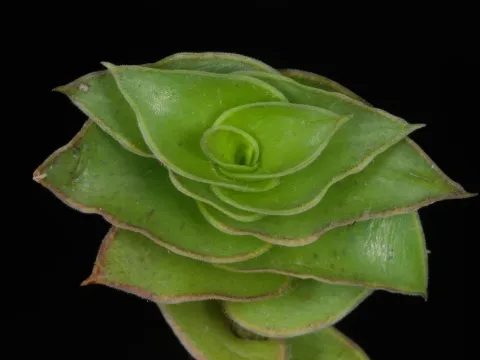
Callisia
Callisia Loefl.
Callisia (Callisia Loefl.) is a genus of perennial herbaceous plants belonging to the Commelinaceae family. Originally native to the tropical and subtropical regions of the Americas, these plants have adapted to high-humidity environments and filtered light conditions.
What the section contains


Callisia
The agronomic management of Callisia requires strict temperature control, ideally maintained between 20°C and 25°C. Exposure to extreme fluctuations or cold drafts can significantly disrupt plant physiology, leading to chlorosis or stunted development.
Soil requirements are centered on well-draining, nutrient-rich substrates with a neutral pH level. Proper aeration is crucial to prevent root asphyxiation, which is a common failure factor in commercial production systems or greenhouses.
Watering practices must be precise; the soil should be kept consistently moist but never saturated. Over-irrigation is the leading cause of root rot, necessitating the use of high-quality drainage layers in the containers or planting beds.
Light intensity plays a critical role in the crop's development. While Callisia thrives in bright, indirect light, prolonged exposure to harsh, direct sunlight can lead to leaf scorch and reduced photosynthetic efficiency in the foliage.
The primary pests affecting Callisia are spider mites, mealybugs, and scale insects. These organisms thrive in low-humidity conditions, emphasizing the need for regular climate monitoring and the maintenance of adequate atmospheric moisture levels.
Fungal pathogens, particularly those causing stem and root rot, represent the most severe threat to plant viability. These diseases are often opportunistic, taking hold when plants are overwatered or kept in poorly ventilated environments.
Integrated Pest Management (IPM) strategies are recommended to mitigate threats. This includes the application of biological controls and selective systemic insecticides, while ensuring that the chemical residue levels comply with safety standards.
Nutritional imbalances can also mirror symptoms of disease. A yellowing of the leaves, or chlorosis, often indicates a micronutrient deficiency or an accumulation of soluble salts in the root zone, which can be corrected through precision fertilization.
Proactive sanitation, such as removing senescing foliage and ensuring proper spacing between plants, is essential to minimize the risk of cross-contamination and to ensure the overall health of the entire crop population.