
Tropical spiderwort
Commelina benghalensis L.
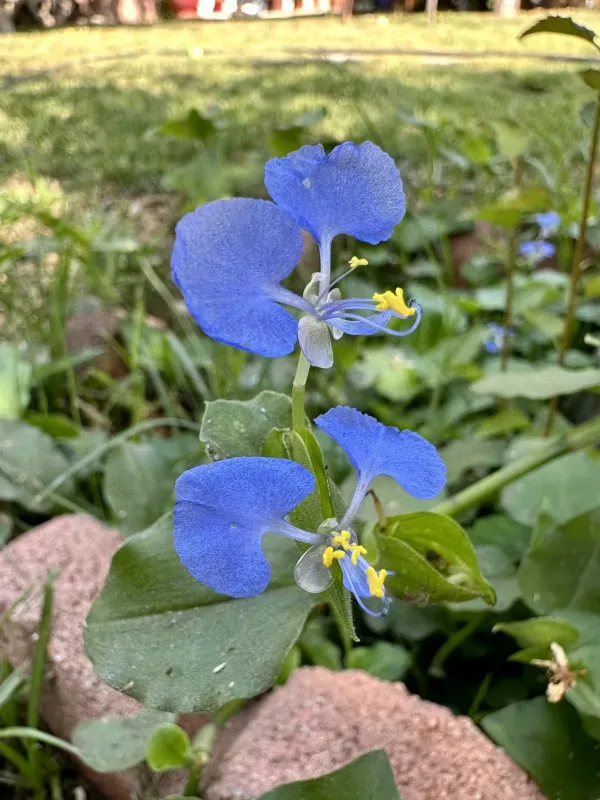
Description
Growing requirements
Tropical spiderwort (Commelina benghalensis L.) belongs to the Commelinaceae family. It is a sprawling, perennial herb known for its rapid growth rate and ability to colonize various habitats, ranging from tropical forests to agricultural fields.
Native to tropical regions of Asia and Africa, it has successfully spread across the globe. The plant is characterized by its succulent, branching stems and dual types of flowers: showy blue chasmogamous flowers and inconspicuous subterranean cleistogamous flowers.
The plant thrives in moist, fertile soils with high organic content. It requires a warm, humid climate to reach its full vegetative potential. While it can survive in partial shade, it grows significantly faster under full sunlight with consistent water availability.
Agrotechnical management involves careful site selection to ensure good drainage. Although it is moisture-loving, waterlogged soil can lead to root system decay, especially in the early stages of development.
Economically, the plant is valued for its nutritional profile in several cultures, where young shoots are consumed as leafy vegetables. In addition, its medicinal applications are being studied for potential anti-inflammatory and diuretic properties.
Main diseases and pests
The main pests affecting Commelina benghalensis include aphids, spider mites, and leaf-mining insects that can significantly reduce the photosynthetic capacity of the foliage. Infestations are most common during the peak growing season when temperatures are highest.
Fungal pathogens such as leaf spot fungi and powdery mildew pose a constant threat, particularly in greenhouses or under conditions of poor ventilation. These infections can spread rapidly if moisture levels remain unchecked.
Weed control is a major challenge for farmers, as the plant reproduces via both seed production and vegetative propagation from stem fragments. Standard herbicides are often ineffective, necessitating physical removal and intense cultivation practices.
Integrated Pest Management (IPM) strategies for this plant emphasize the use of crop rotation and physical barriers. Planting competitive cover crops can successfully suppress the growth of spiderwort by blocking the necessary sunlight.
For sustainable production, regular scouting is essential. Implementing good agricultural practices, including the maintenance of optimal soil pH and nutrient balance, strengthens the plant's natural resistance to opportunistic pathogens.