
Golden Saxifrage
Chrysosplenium macrostemon
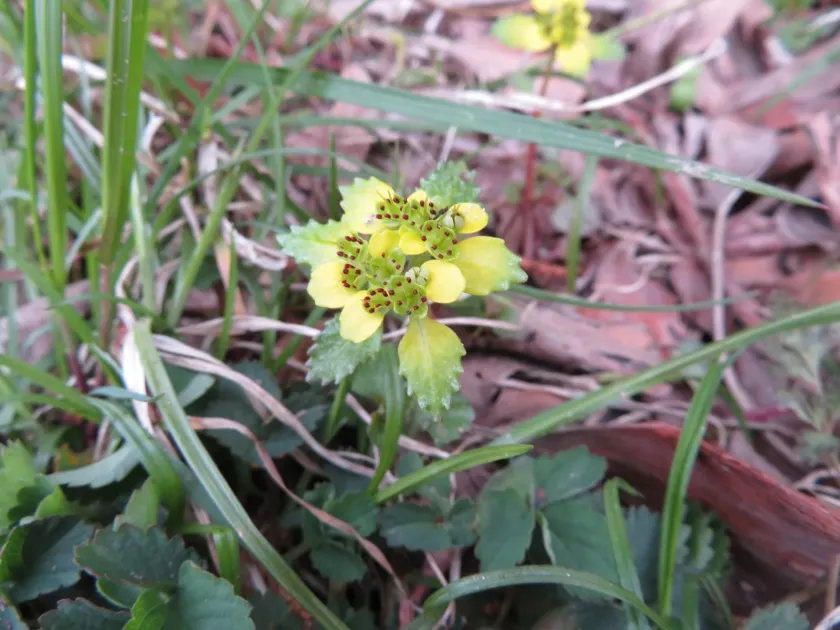
Description
Growing requirements
Golden saxifrage (Chrysosplenium macrostemon) is a member of the Saxifragaceae family. This perennial herb is native to moist, shaded woodland environments across East Asia, where it thrives in cool and humid microclimates along forest streams.
The plant requires nutrient-rich, moist, and well-drained soils to maintain its growth. It is highly sensitive to heat and drought; therefore, selecting a site that receives filtered or deep shade is essential for the plant's long-term survival in garden conditions.
Botanically, it is characterized by creeping stems and succulent-like leaves. Its yellow-green flowers emerge in early spring, and its long stamens, from which the species name macrostemon is derived, are a key identifying feature.
In terms of хозяйственного (utilitarian) use, it serves primarily as an ornamental groundcover for moist, shaded gardens and riparian landscapes. It is valued for its ability to form dense mats that suppress weeds and retain moisture in the soil.
Cultivation practices involve regular irrigation to prevent soil drying and applying organic mulch to mimic the natural forest floor environment. Propagation is typically achieved through division, as the stems root easily at their nodes when in contact with moist soil.
Main diseases and pests
The most common disease threats involve fungal infections, specifically root and crown rots, which are exacerbated by poor drainage and stagnant water. Proper site preparation is critical to avoid these moisture-related issues.
Gastropod pests, such as slugs and snails, represent the primary threat to the foliage. They can quickly strip the succulent leaves, necessitating the use of deterrents like copper tape or physical barriers in areas with high pest populations.
Excessive heat represents an abiotic threat that can lead to leaf scorch and desiccation. If ambient temperatures exceed the plant's tolerance threshold, the foliage may wilt or die back prematurely during the summer months.
Botrytis blight may occur in conditions of high humidity combined with stagnant air. Increasing air circulation around the plants through proper spacing and regular garden maintenance helps mitigate this risk significantly.
Invasive weed encroachment is a major challenge for young plantings. Because this species is relatively low-growing, it requires consistent manual weeding until it has established a dense, self-sustaining groundcover canopy.